

Most conversion leaks website issues don’t look like problems.
There are no crashes.
No visible errors.
But behind the scenes, your system is quietly losing potential customers.
Users hesitate.
Flows feel unclear.
Decisions get delayed.
And over time, these small inefficiencies compound into serious performance loss.
Conversion Leaks Are Built Into the System
When a website doesn’t convert, the first instinct is to blame the design.
But design is rarely the root cause.
Most website conversion leaks come from deeper structural problems:
- Unclear user journeys
- Weak messaging hierarchy
- Missing trust layers
- Inconsistent navigation
- Lack of system logic
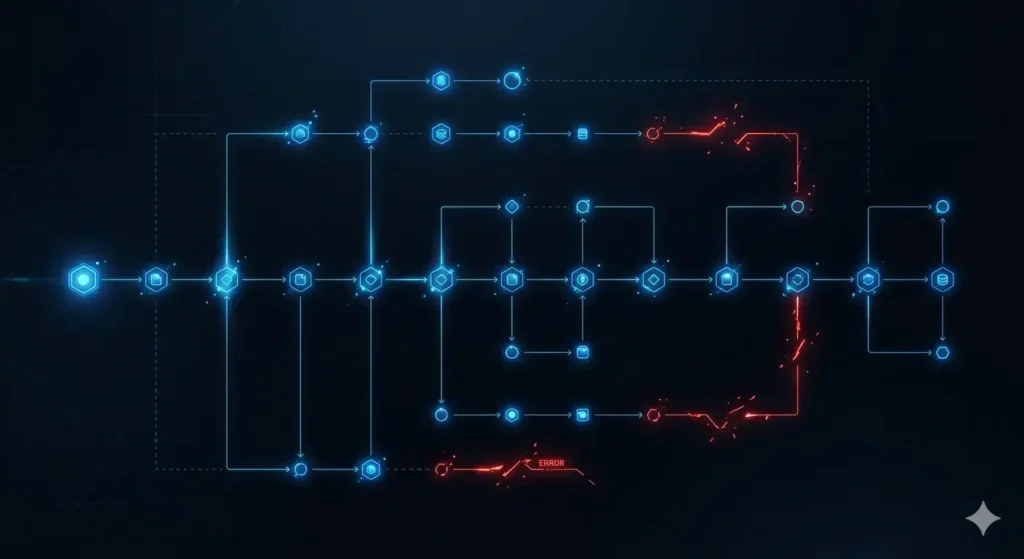
These are not visual issues.
They are system issues.
👉 Why users hesitate on your website
Where Conversion Leaks Actually Happen
Conversion leaks don’t exist in one place.
They happen across the entire experience.
From the moment a user lands on your site to the moment they decide to act.
Entry Stage
Users arrive but don’t immediately understand the value.
Exploration Stage
Navigation creates friction instead of guidance.
Trust Stage
Users look for signals — and don’t find enough.
Action Stage
Calls to action feel weak or unclear.
Conversion Stage
Forms and checkout create unnecessary resistance.
Each step introduces small drop-offs.
And combined, they create a significant loss.
This is how most conversion rate issues silently grow.
Check Out Problems Are Just the Surface
Many businesses focus on checkout optimization.
But checkout is rarely the starting point.
It’s where the problem becomes visible.

Common friction points include:
- Long or confusing forms
- Limited payment options
- Unexpected steps
- Lack of reassurance
- Slow performance
These issues increase abandonment.
But they are only symptoms of deeper ecommerce conversion leaks.
Sales Funnel Leaks Break Momentum
A website should guide users forward.
But when the flow is misaligned, momentum breaks.
This is where sales funnel leaks happen.
Users stop not because they are not interested —
But because the path is unclear.
To fix this, every system should answer:
- What is the next step?
- Why should the user trust it?
- How easy is it to take action?
If any of these are missing, friction increases.
And friction reduces conversion.
UX Friction Is the Hidden Killer
Most websites don’t fail dramatically.
They fail subtly.
Small UX issues create hesitation:
- Too many choices
- Weak hierarchy
- Poor mobile experience
- Delayed loading
- Inconsistent layouts
These are classic UX friction website problems.
They don’t stop users immediately.
But they slow them down.
And slowed users rarely convert.
The Role of Systems and Automation
Conversion doesn’t end when a user clicks.
It continues through systems.
Without proper setup:
- Leads are not tracked
- Follow-ups don’t happen
- Data is incomplete
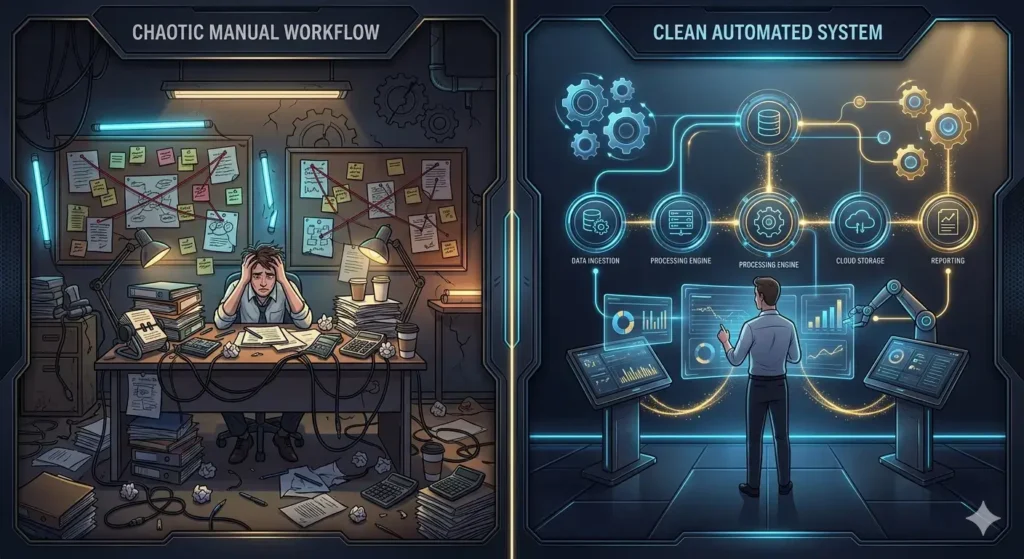
This creates lost leads website scenarios.
Automation solves this by:
- Capturing every interaction
- Structuring the flow
- Ensuring consistency
This is where performance becomes predictable.
Signs You Have Conversion Leaks
You don’t need advanced analytics to suspect issues.
Common indicators:
- Traffic is stable, but results fluctuate
- Users drop off at key steps
- Leads feel inconsistent
- No clear tracking system
- The journey feels disconnected
These are not random problems.
They are patterns.
And patterns indicate leaks.
Final Thought
Conversion leaks are not dramatic failures.
They are silent inefficiencies.
Fixing them is not about redesigning everything.
It’s about improving structure:
- Clarifying flow
- Reducing friction
- Strengthening trust
- Aligning systems
Because growth doesn’t come from more visitors.
It comes from better performance.