
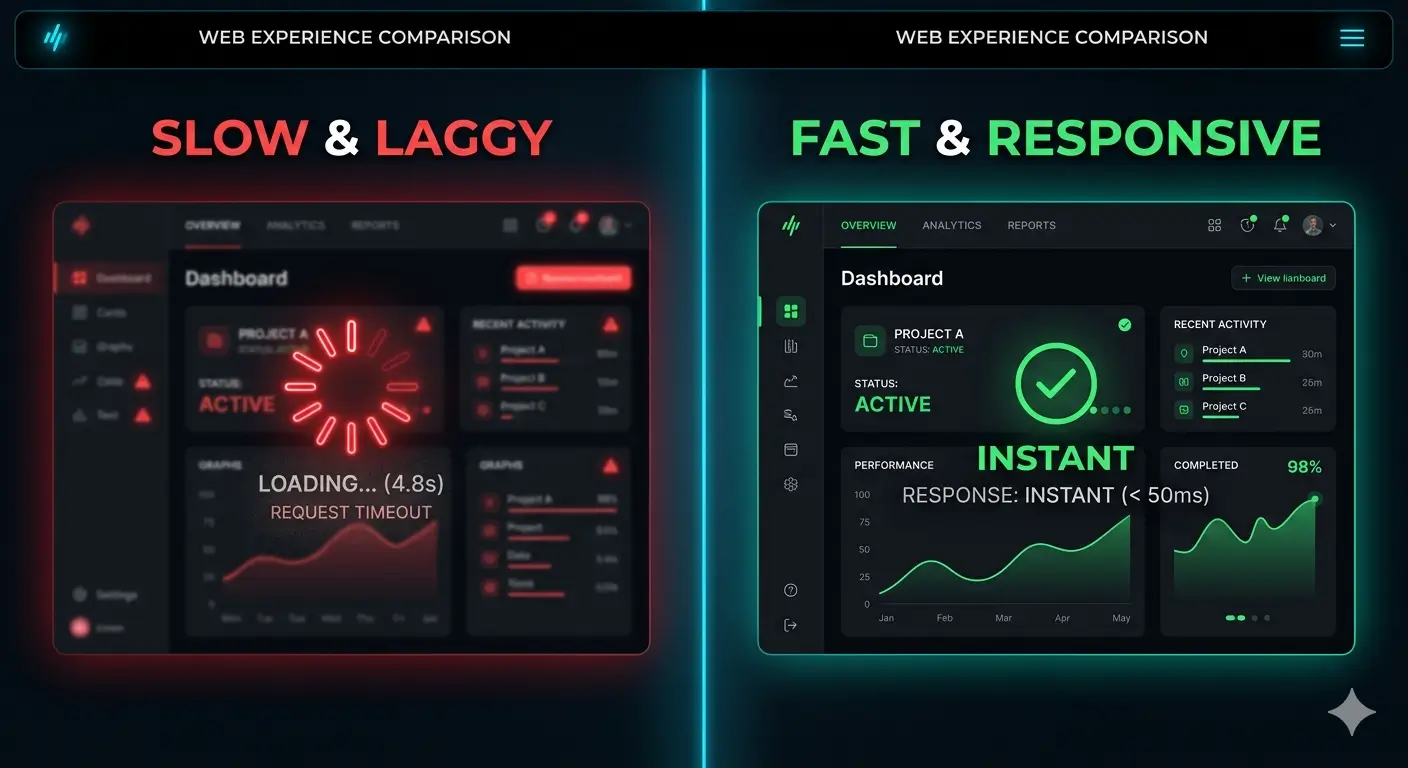
A slow website impact is rarely visible at first glance.
Your website loads.
Your pages open.
Your forms exist.
But underneath, opportunities are disappearing.
Most businesses assume traffic is the problem.
In reality, the issue is often website speed issues silently damaging performance.
This is where business is lost — not loudly, but continuously.
The Hidden Cost of Slow Website Impact
Every second of delay affects behavior.
Users don’t wait.
They react.
- They abandon pages
- They stop scrolling
- They lose trust instantly
- They never return
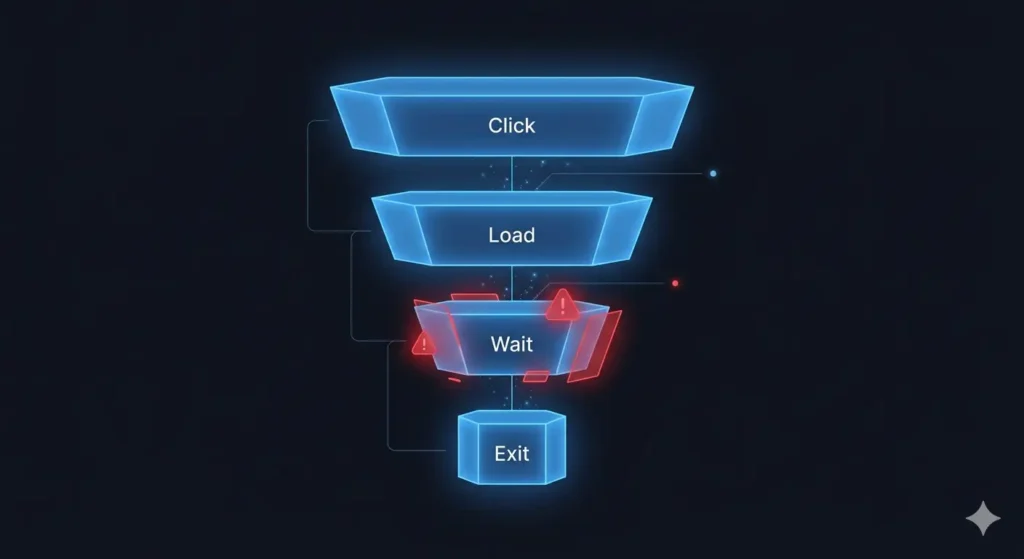
This creates a chain reaction:
Traffic → Click → Delay → Exit
That’s website revenue loss in real time.
A slow website doesn’t just reduce conversions.
It filters out your best opportunities.
If your system structure is weak, speed issues get worse — read:
“Why Your Website Isn’t Converting (Even With Traffic)”

Speed and Conversion Rate Are Directly Connected
Speed directly impacts the slow website conversion rate.
Even small delays create friction:
- 1–2 seconds → noticeable hesitation
- 3–4 seconds → increased bounce rate
- 5+ seconds → major drop in conversions

This is not a design issue.
It’s a performance problem affecting user behavior.
Users don’t analyze your site.
They feel it.
And slow performance signals:
- unreliability
- lack of professionalism
- technical weakness
That’s why website bounce rate increases dramatically on slow sites.
Slow Websites Break User Experience Flow
A slow website destroys flow.
Instead of a smooth journey, users experience interruptions:
- Delayed page transitions
- Lag between actions
- Slow loading elements
- Unresponsive buttons
This creates user experience slow website friction.
And friction kills decisions.
👉 For deeper insight into trust and UX impact:
“Why Your Website Feels Untrustworthy (Even If It Looks Good)”
Website Performance Optimization Is Not Optional
Many businesses treat speed as a “later fix.”
That’s a mistake.
Without website performance optimization, every marketing effort becomes inefficient:
- Paid ads lose ROI
- SEO traffic underperforms
- Funnels leak conversions
You’re not just losing speed.
You’re losing compounding revenue.
Where Slow Website Problems Actually Start
Most speed issues are structural:
- Heavy scripts and unused assets
- Poor hosting infrastructure
- Unoptimized images
- Broken caching strategy
- Too many plugins
But the real issue is this:
Speed is treated as a fix — not as a system.
👉 To understand structural gaps better:
“What Happens When Your Website Has No System”
Identifying Slow Website Impact Signals
You don’t need advanced tools to notice the problem.
Look for these signs:
- High bounce rate
- Low engagement time
- Drop-offs before interaction
- Weak conversion rates
- Inconsistent performance
These are not random metrics.
They are indicators of slow website impact on business growth.
Most businesses don’t realize the problem because everything appears to work.
Pages load. Buttons respond. Systems seem functional.
But performance is not about whether something works — it’s about how fast and how smoothly it works.
Between those milliseconds, decisions are made.
And in that gap, opportunities are either captured — or lost.
Final Thought
A slow website is not a minor issue.
It’s a silent revenue blocker.
While you focus on traffic, design, or ads —
Your system may be losing opportunities at every step.
Fixing speed is not about milliseconds.
It’s about removing friction from the entire journey.