

A website without a system doesn’t fail loudly.
It fails quietly.
No crashes.
No obvious errors.
Just slow leaks… missed leads… broken flows… and manual chaos behind the scenes.
From the outside, everything looks fine.
Inside, it’s falling apart.
The Hidden Cost of a Website Without a System

Most businesses don’t realize they’re running a website without a system.
Because the problem isn’t visual.
It’s operational.
What usually happens:
- Leads don’t reach the right place
- Forms don’t trigger actions
- Bookings require manual follow-up
- Payments don’t connect to workflows
- Data lives in separate tools
Nothing is technically “broken.”
But nothing actually works together.
This is where most websites lose money without knowing it.
These issues are often caused by deeper structural gaps in how the website is built.
Why “Looking Good” Doesn’t Mean Working Well
A modern website can look premium and still be without a system.
Because of the design ≠ structure.
A brochure-style website:
- shows information
- presents services
- looks clean
But it doesn’t:
- process leads
- automate workflows
- connect systems
- support operations
Why your website feels untrustworthy.
Because when systems are missing, users feel friction — even if they don’t understand why.
What Breaks Inside a Website Without a System
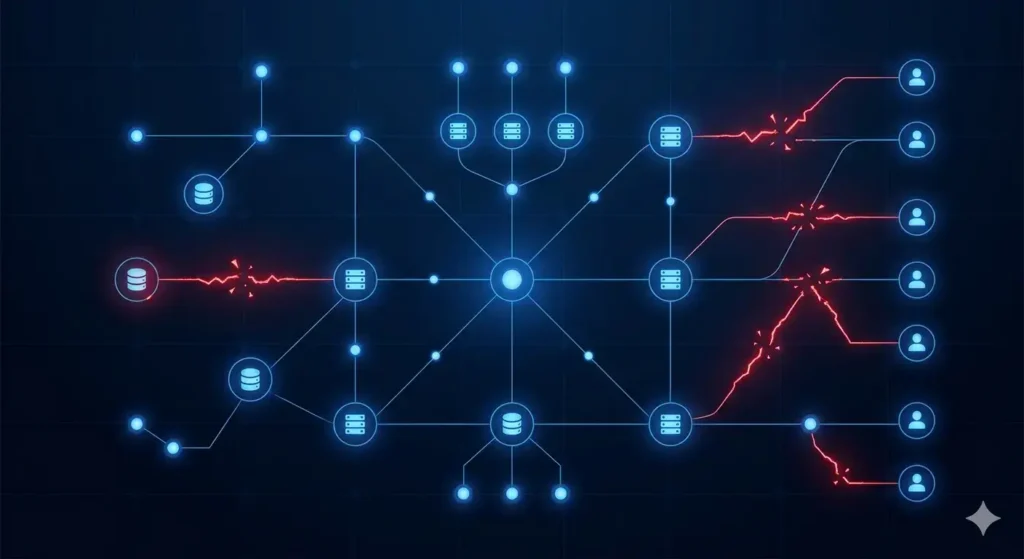
A website without a system creates invisible problems:
1. Lead Loss
Users submit forms → nothing happens
No routing, no automation, no tracking
2. Manual Operations
Every action requires human intervention
Emails, confirmations, follow-ups
3. Broken Customer Journey
No flow from interest → action → conversion
4. Data Chaos
CRM, email, website — all disconnected
5. Delayed Response Time
Speed drops → trust drops → conversions drop
This is not a traffic problem.
This is a system problem.
Most of these problems exist because the website was never built as a connected system.
The Real Difference: Website vs System
Without a system is a static layer.
A system-based website is an operational infrastructure.
A real system includes:
- lead capture + routing
- CRM integration
- automated responses
- booking or checkout flows
- data tracking & analytics
- internal process automation
Revenue Leaks Start Here
Most revenue leaks don’t come from traffic.
They come from structure.
Without a system creates:
- incomplete conversions
- missed opportunities
- poor follow-up
- inconsistent experience
If your website depends on manual work
It cannot scale.
How to Know If Your Website Has No System
You likely have a system if:
- You manually respond to every lead
- You don’t track what happens after form submission
- Your tools don’t talk to each other
- Your team relies on copy-paste workflows
- Your site doesn’t directly support operations
These are not small issues.
Many of these signs are also tied to performance problems that slow down user decisions.
They are structural problems.
What Fixing It Actually Means
Fixing without a system is not a redesign.
It’s restructuring.
It means:
- connecting your tools
- automating processes
- building flows, not pages
- aligning the website with operations
This is where real performance comes from.
Final Thought
A website without a system is not a business tool.
It’s a surface.
A system-based website becomes:
- scalable
- predictable
- efficient
- measurable
And most importantly:
It works without constant manual effort.
But many websites still fail silently due to hidden conversion issues.
Your Website Might Be Working — But Is It Operating?
If you’re running without a system, you’re not scaling — you’re compensating.
👉 Start with clarity, not assumptions.