
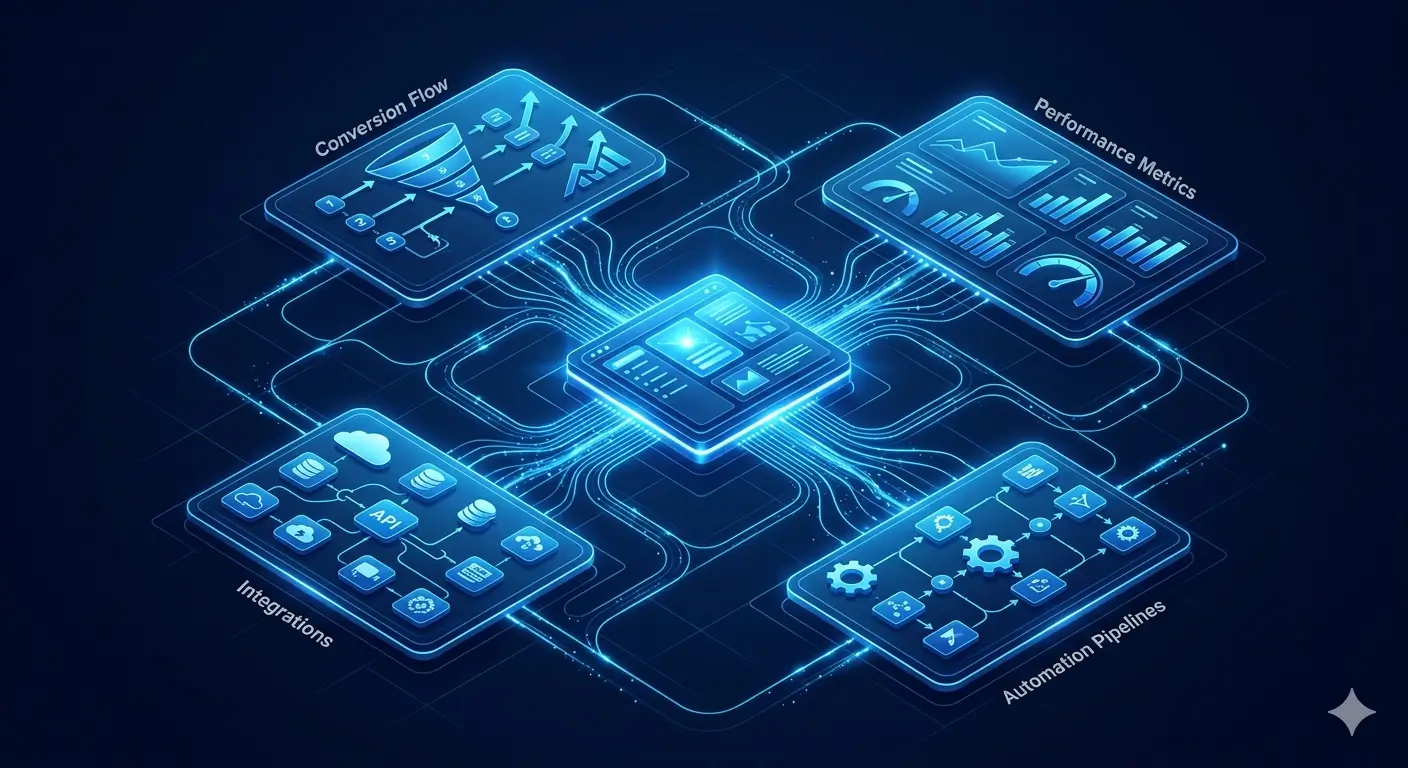
Most business websites fail not because of design, but because they lack proper business website systems.
They look good.
They load (sometimes).
They get traffic.
But they don’t convert. They don’t scale. And they don’t support real business growth.
A high-performing website isn’t a page.
It’s a system.
Why Business Website Systems Matter More Than Design
A website without systems is just a static layer.
It doesn’t guide users.
It doesn’t process behavior.
It doesn’t connect with your business operations.
That’s why businesses struggle with:
- Low conversion rates
- Broken user journeys
- Manual processes
- Missed opportunities
The real problem?
There’s no website system architecture behind the interface.
1. Conversion System (Turning Traffic Into Action)
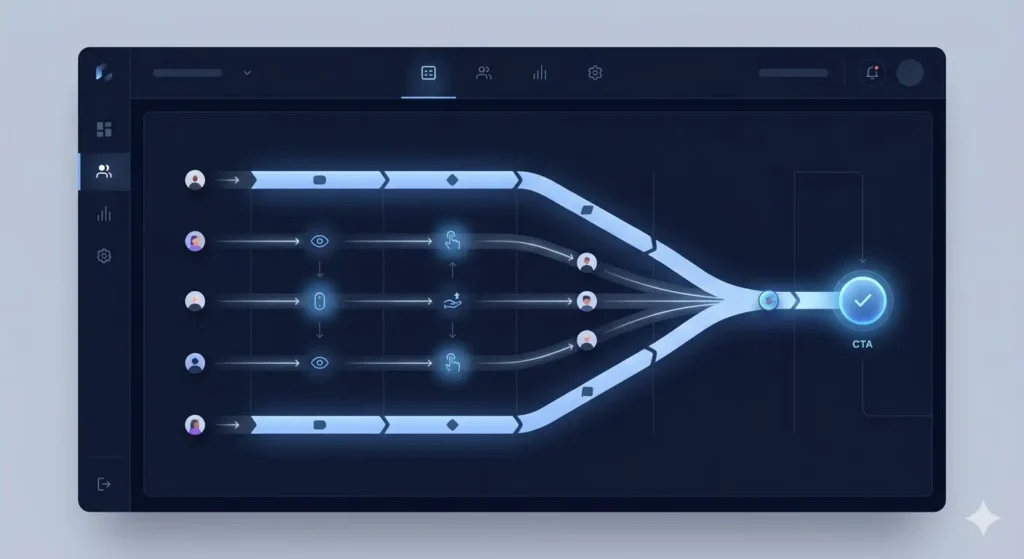
The first and most critical part of any business website system is conversion.
Without it, traffic means nothing.
A proper website conversion system includes:
- Clear CTAs
- Structured user flow
- Trust signals (reviews, proof, guarantees)
- Friction-free forms
Most websites fail here because they:
- Ask too much too early
- Don’t guide the user
- Create confusion instead of clarity
Conversion is not a button.
It’s a system.
2. Performance System (Speed = Decisions)
Speed is not technical — it’s psychological.
Your website performance system directly affects how users behave.
Even small delays cause:
- Drop-offs
- Lower engagement
- Reduced trust
A strong performance system includes:
- Optimized assets
- Clean code structure
- Efficient loading strategy
- Server-level optimization
If your site feels slow, users don’t wait.
They leave.

3. Integration System (Connecting Everything Together)
A website should not operate alone.
A proper website integration system connects your website with:
- CRM
- Email automation
- Payment systems
- Analytics
Without integration:
- Data gets lost
- Leads go unmanaged
- Processes become manual
Disconnected tools create friction.
Systems remove it.
4. Automation System (Reducing Manual Work)
A scalable website always includes a website automation system.
This system handles:
- Lead routing
- Email sequences
- Booking confirmations
- Internal notifications
Instead of reacting manually, your business becomes proactive.
Without automation:
- Opportunities are delayed
- Follow-ups are inconsistent
- Growth becomes limited
Automation turns your website into an active part of your business.
5. Structure System (Foundation for Scale)
Finally, everything depends on structure.
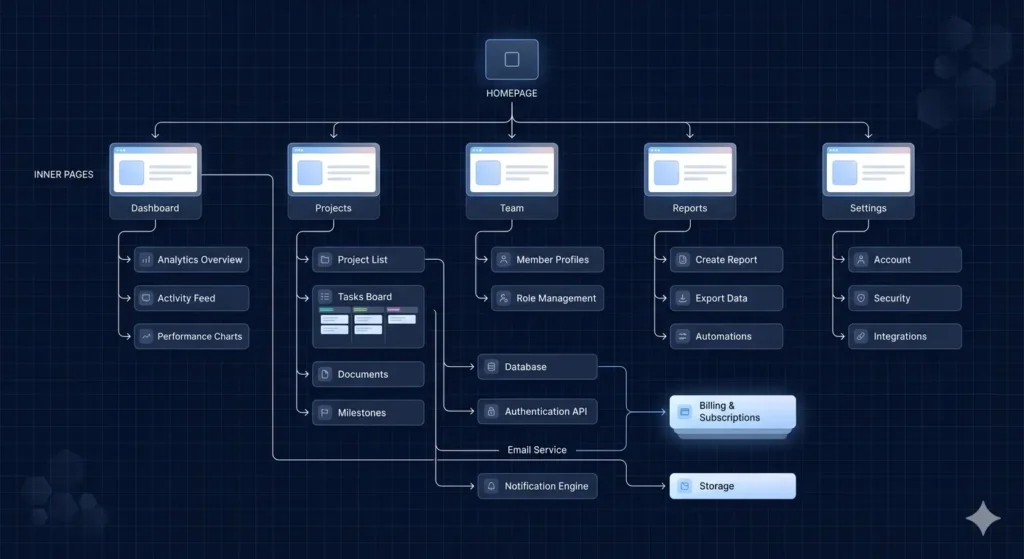
Your scalable website structure defines how well your system performs long-term.
A strong structure includes:
- Logical page hierarchy
- SEO-ready architecture
- Clean internal linking
- Expandable modules
This is what allows your website to grow without breaking.
Without structure:
- Changes become risky
- SEO becomes weak
- Scaling becomes chaotic
Structure is what makes everything sustainable.
Where Most Business Website Systems Break
Most websites don’t fail.
They fail partially — and that’s more dangerous.
Common issues include:
- Strong design but weak conversion system
- Fast website, but no integration system
- Good traffic, but no automation system
The result?
You have pieces of a system — but not the system itself.
How to Identify Missing Business Website Systems
If your website has any of these signals, your systems are incomplete:
- Traffic but no leads
- Leads but no follow-up
- Slow user interactions
- Manual processes
- Inconsistent performance
These are not random problems.
They are system failures.
Final Thought
A website should not just exist.
It should work.
When built with proper business website systems, your website becomes:
- A lead generator
- A conversion engine
- A scalable asset
Not just a digital brochure.
Not Sure If Your Website Has the Right Systems?
If your website gets traffic but doesn’t convert, the problem is not traffic — it’s your system.
We analyze your full website setup, identify missing systems, and show you exactly what’s blocking your growth.