
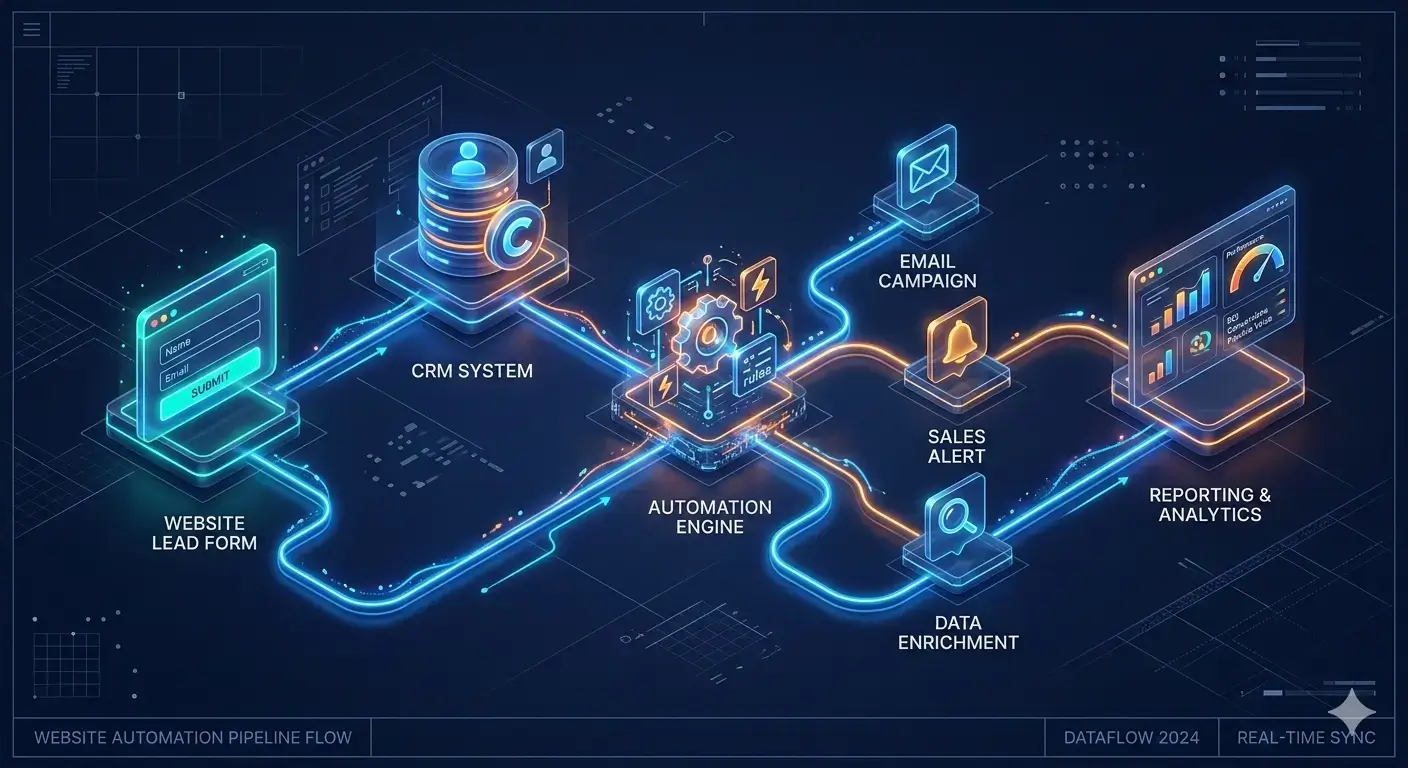
Website System Architecture Is the Missing Layer in Most Websites
Website system architecture is often ignored when companies build their websites. Many businesses focus heavily on design, branding, and visual presentation. While those elements matter, they rarely determine whether a website actually performs as a business asset.
A well-designed page can look impressive and still fail operationally.
In many organizations, websites behave more like digital brochures than operational systems. They present information, but they do not actively support the underlying processes that drive growth.
When a website lacks system architecture, teams start compensating manually.
Leads must be exported and entered into a CRM.
Bookings must be confirmed by email.
Reports must be prepared manually.
Follow-ups depend on human intervention.
Over time, these small inefficiencies accumulate into a significant operational burden.
This is where website system architecture becomes critical.
The Brochure Website Problem
Many websites today still follow the brochure model.
They provide information but do not actively support the business operations behind them.

Common symptoms include:
• manual lead processing
• disconnected booking systems
• payment workflows handled outside the website
• inconsistent follow-up communication
• limited operational visibility
The result is a website that generates activity but fails to manage it.
Instead of acting as an operational hub, the website becomes a passive interface that requires constant manual supervision.
This approach does not scale.
Modern businesses need websites that operate as systems, not static presentations.
Many businesses assume that improving design alone will fix performance issues.
But in reality, the problem often lies deeper — in how users interact with the system and how trust is built across the experience.
This is why many visually polished websites still fail to convert.
Website System Architecture: What a Real System Includes
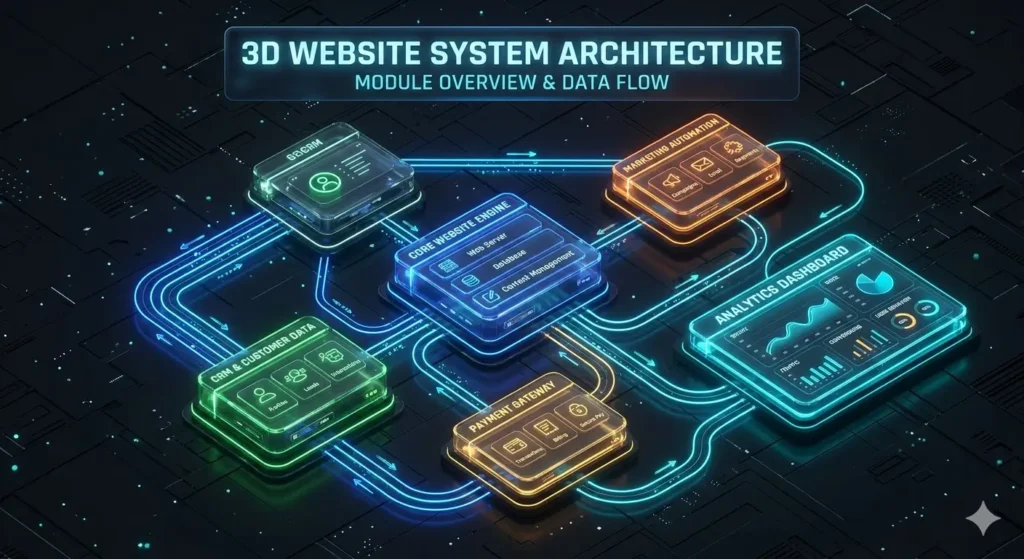
A true website system architecture connects the digital interface with the operational structure of the business.
Rather than isolating functions, the system coordinates them.
A typical website automation system may include:
• booking or lead generation logic
• integrated payment processing
• CRM synchronization
• automated notification flows
• structured reporting dashboards
• data synchronization between tools
When these components are connected, the website becomes part of the operational infrastructure.
Instead of generating manual tasks, it reduces them.
Revenue Leaks Often Come From Structural Gaps
Revenue loss is frequently attributed to marketing inefficiency or weak campaigns.
However, many revenue leaks originate from structural gaps in the website system itself.
Examples include:
• friction during checkout
• unclear conversion paths
• slow or confusing booking processes
• missing automation after inquiries
• fragmented customer journeys
These issues rarely appear dramatic in isolation.
Yet together they quietly reduce conversion rates and increase operational workload.
A scalable website architecture addresses these gaps by aligning user experience, automation, and operational systems.
These leaks are rarely visible in analytics at first.
They build up silently through friction, broken flows, and missed intent signals.
In many cases, businesses don’t even realize where revenue is being lost.
Automation Multiplies Operational Efficiency
Automation is one of the most powerful outcomes of a system-based website.
When processes are integrated into the website structure, repetitive manual tasks disappear.
For example:
A booking confirmation can trigger automated notifications.
Lead forms can populate CRM pipelines automatically.
Orders can generate operational reports without manual data entry.
This does not simply save time.
It increases reliability.
Automation ensures that processes run consistently, regardless of team workload.
In practice, this transforms the website into a business infrastructure layer rather than a marketing asset.
Without automation, growth creates pressure instead of efficiency.
Manual processes become bottlenecks, slowing down response time and reducing conversion opportunities.
This is especially critical when performance issues compound over time.
Identifying Structural Weaknesses
Many performance problems originate from architectural issues rather than design flaws.
Indicators of weak website system architecture include:
• inconsistent lead response times
• fragmented tools and platforms
• heavy reliance on manual workflows
• limited reporting visibility
• slow operational coordination
These symptoms indicate that the website operates independently from the business systems around it.
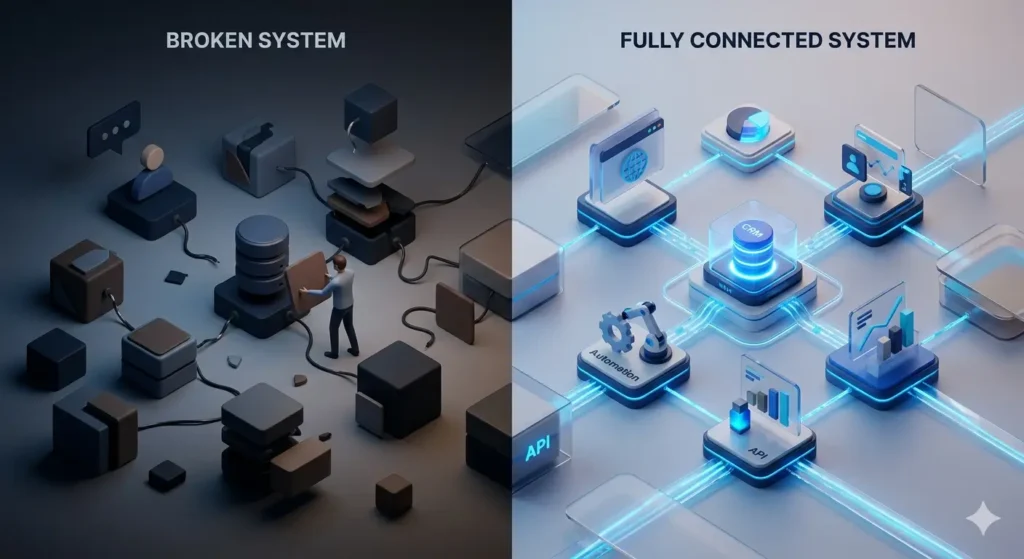
A properly designed website system architecture removes these disconnects and creates a structured operational flow.
Most businesses try to fix symptoms instead of systems.
They redesign pages, change visuals, or tweak content — but the underlying structure remains broken.
This is why many website projects fail before they even start.
Final Thought
Design attracts attention.
But systems drive outcomes.
Businesses that treat their websites as operational systems gain a significant advantage over those relying on brochure-style sites.
A website that integrates automation, CRM flows, payment infrastructure, and reporting becomes a scalable foundation for growth.
In other words, the difference between a website and a website system is not visual.
It is structural.
If your website isn’t converting, the issue is rarely traffic — it’s structure.
Your Website Should Work Like a System — Not a Brochure
If your website isn’t connected to your operations, you’re losing time, leads, and revenue every day.
We design websites as structured systems — built to automate, convert, and scale.