

Why Conversion Optimization Mistakes Are So Dangerous
Conversion optimization mistakes are rarely obvious. Your website might look clean, modern, and even get traffic — yet still fail to convert.
This is because most conversion issues are structural, not visual.
When users land on your website, they are constantly asking:
- What is this?
- Is this for me?
- Can I trust it?
- What should I do next?
If your website cannot answer these questions instantly, users leave.
This is where most website conversion problems begin.
The Hidden Nature of Website Conversion Problems
Unlike broken features, conversion issues don’t trigger alerts. There’s no error message when a user decides not to trust your site.
Instead, users simply disappear.
Common signals include:
- High traffic but low inquiries
- Users scrolling but not clicking
- Drop-offs in checkout or booking
- Low engagement on key sections
These are classic low conversion rate causes — and they often go unnoticed.
7 Conversion Optimization Mistakes That Kill Performance
1. Weak Value Proposition
Users don’t understand what you offer within seconds.
If your messaging is vague, your conversion rate drops instantly.
2. No Clear Direction
Many websites suffer from conversion funnel issues where users don’t know what action to take next.
No direction = no conversion.
3. Friction in the User Flow
Every extra step, delay, or confusion reduces conversions.
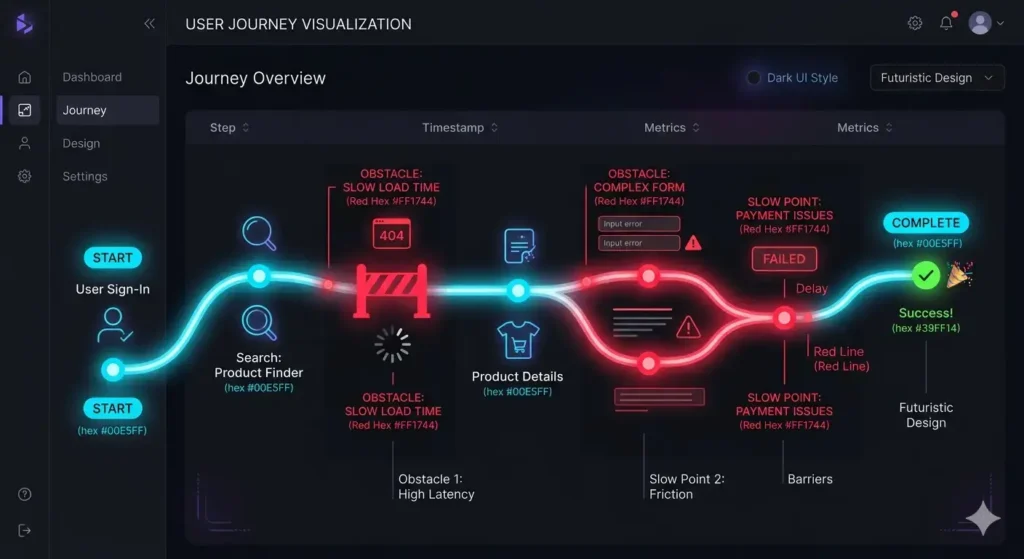
Typical UX conversion mistakes include:
- Too many form fields
- Complex booking flows
- Slow transitions
4. Lack of Trust Signals
Users hesitate when trust is unclear.
Missing elements:
- Testimonials
- Clear pricing
- Secure indicators
This directly connects to Website Trust Signals: Trust Is a Structural Layer, Not a Design Element
5. Cognitive Overload
Too many choices or too much information leads to inaction.
Confused users don’t convert.
6. Mobile Experience Issues
A broken mobile experience destroys conversions instantly.
Many websites ignore this — yet mobile dominates traffic.
👉 Learn more in Website Performance Optimization: 7 Hidden Issues Slowing Your Site
7. No Conversion Strategy
Most businesses never design how users should convert.
They rely on design instead of structure.
As explained in Design Without Strategy Is Expensive Decoration
The Psychology Behind Conversion Failures
Conversion is not logical — it’s psychological.
Users act based on:
- Clarity
- Trust
- Effort

If your website increases effort or reduces clarity, conversions drop.
This is why user behavior on websites matters more than design.
Conversion Is a System, Not a Page
Many businesses think improving conversions means redesigning pages.
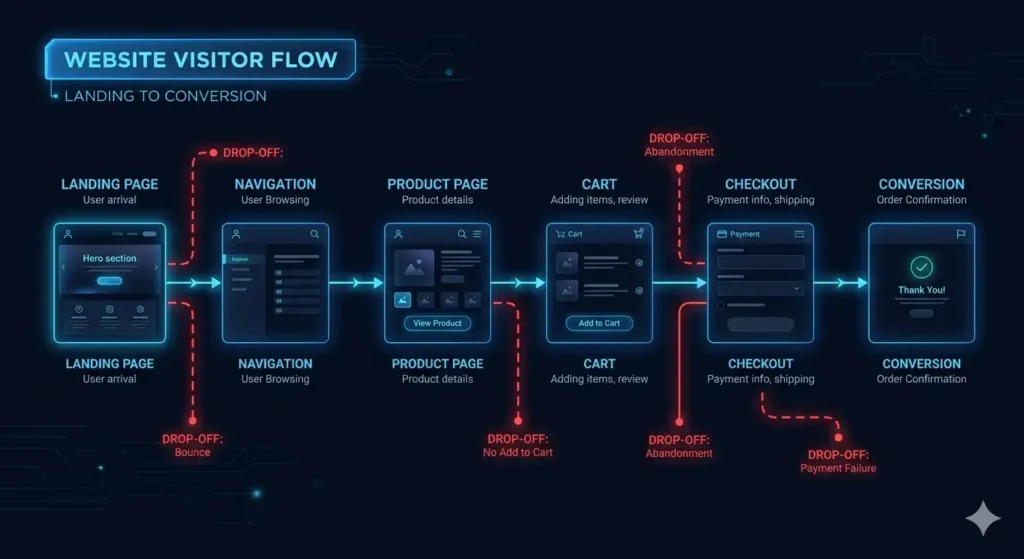
But real improvement comes from fixing systems:
- Messaging flow
- Decision structure
- Action paths
This aligns with Website System Architecture: From Brochure to System
How to Improve Website Conversions Structurally
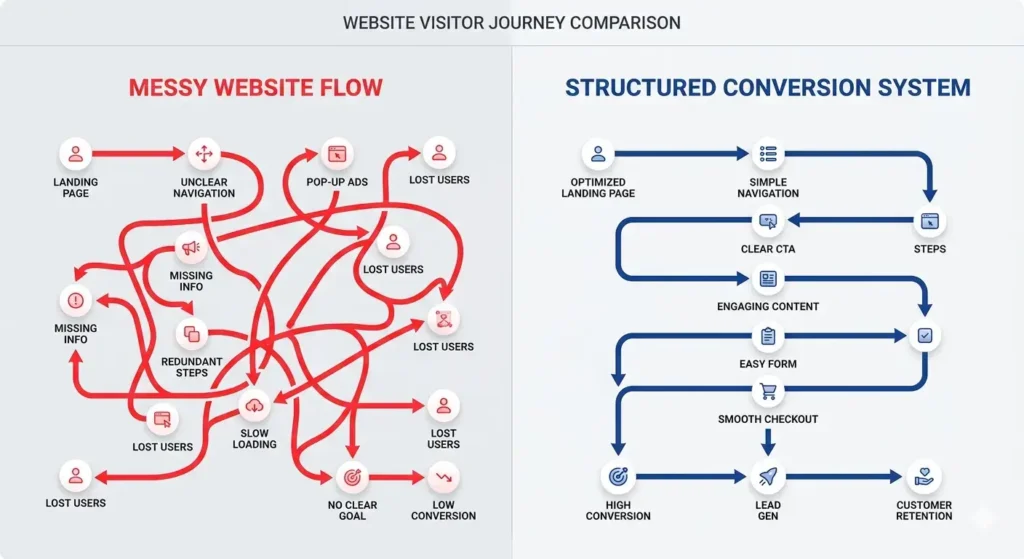
To fix conversion optimization mistakes, you must approach your website as a system.
Focus on:
- Clear positioning
- Structured user journey
- Reduced friction
- Strong trust layers
- Defined CTAs
This is how you truly improve website conversions.
A Simple Conversion Framework
1. Clarity Layer
What you do and who it’s for must be instantly clear.
2. Trust Layer
Users need proof before action.
3. Friction Layer
Remove anything that slows decisions.
When these three layers align, conversion improves naturally.
Fix What’s Blocking Your Conversions
Most websites don’t need more traffic — they need fewer mistakes.
If your website is not converting, the problem is already inside your system.