

Most websites don’t lose customers because of design — they lose them because of performance. Most businesses underestimate the real website performance impact because they treat it as a technical detail rather than a core business driver. But performance directly shapes how users experience your website, how they perceive your brand, and whether they take action or leave.
Website performance impact is not just about speed — it directly affects user behavior, slow website conversion rates, and overall revenue.
Why Website Performance Is Not Just About Speed
When we talk about performance, most people think about loading time. But the real website performance impact goes far beyond speed metrics.
Performance influences:
- How quickly users trust your website
- How smoothly they navigate
- How confidently they complete actions
If your website feels slow, users don’t analyze it technically — they react emotionally. The experience feels broken, and that feeling reduces engagement instantly.
Your website should not rely on isolated fixes — it should function as a structured system where performance supports every interaction.
1. Slow Load Time = Lost First Impression
The first few seconds define everything.
If your website takes too long to load:
- Users lose patience
- They assume low quality
- They leave before seeing your offer
This is where website loading speed becomes critical — even a few seconds delay can significantly reduce engagement.
Even a one-second delay can significantly reduce conversions. Users today expect instant response. Anything slower creates doubt.

2. Poor Performance Breaks User Flow
Once a user enters your site, performance continues to shape their experience.
Common issues include:
- Delayed page transitions
- Laggy interactions
- Slow-loading elements
These interruptions create friction. And friction disrupts decision-making.
These are common website performance issues that break the user journey and reduce conversions.
3. Mobile Performance Is a Silent Killer
Most users today browse on mobile devices.
If your mobile performance is not optimized:
- Pages load inconsistently
- Content shifts unexpectedly
- Buttons become harder to use
This creates frustration, even if users don’t consciously realize it.
The real website performance impact often happens here — where attention spans are shorter and expectations are higher.
Mobile users are especially sensitive to website speed impact, making performance a key conversion factor.
4. Performance Affects SEO and Visibility
Search engines prioritize fast and efficient websites.
A slow website leads to:
- Lower rankings
- Reduced organic traffic
- Poor crawl efficiency
This means your website speed impact affects not only user experience but also how easily people can find your business.
Performance is not just about retention — it’s about visibility.
Google directly considers website speed and SEO signals when ranking pages.
5. Slow Websites Destroy Trust
Users rarely say “this website is slow.”
Instead, they think:
- “This feels unreliable”
- “Something is off”
- “I’m not sure I trust this”
This is where performance stops being technical — and starts affecting perception. Performance affects perception.
A slow-loading page creates uncertainty. And uncertainty kills trust.
Trust is not built only through design — trust is a structural layer that includes how your website performs under real conditions.
6. High Drop-Off Before Conversion Points
Performance issues often become critical near conversion actions:
- Booking forms
- Checkout flows
- Contact submissions
These are the most sensitive moments in the user journey.
If performance drops here:
- Users hesitate
- They doubt the process.
- And in most cases — they leave without converting.
Many businesses struggle because their website is not converting, even with traffic, and performance issues are often a hidden reason.
This is a classic case of slow website conversion loss — users leave before reaching decision points.
7. Performance Issues Compound Over Time
A single issue might not seem critical.
But multiple issues combined create a system-wide problem:
- Heavy images
- Unused scripts
- Weak hosting
- No caching
Together, they create a slow, unstable experience.
This is the real website performance impact — not one problem, but a chain reaction across your entire system.
Why Website Performance Impact Directly Reduces Revenue
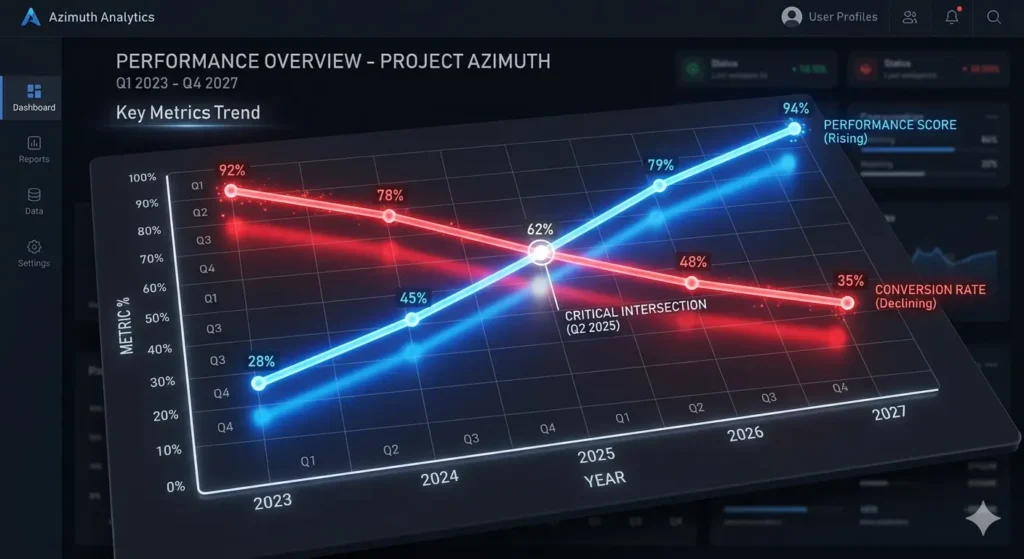
Performance problems affect every key metric:
- Higher bounce rates
- Lower engagement
- Reduced conversions
Users don’t wait. They leave.
This means your website is actively losing potential clients.
In many cases, businesses struggle because their traffic isn’t turning into revenue, and hidden performance issues are often the real cause behind it.
These performance gaps often act as conversion leaks, quietly reducing your results without being immediately visible.
How to Improve Website Performance Effectively

Improving performance requires a structured approach, not random fixes.
Key steps include:
- Optimizing images and media
- Reducing unnecessary scripts
- Improving hosting response time
- Implementing caching and CDN
- Monitoring performance continuously
The goal is not just speed — it’s consistency.
A high-performing website feels stable, predictable, and smooth. That experience builds trust and supports conversions.
The real difference comes when performance is treated as part of the system — not an afterthought.
To fix this, you need a structured page speed optimization approach.
A proper performance optimization website strategy focuses on both speed and user flow.
Fix Your Website Performance Before It Costs You More
Your website is already getting traffic.
The problem is — it’s leaking conversions.
Fix the performance layer before it costs you more.
Start Your Project → Request a Quick Fix →