
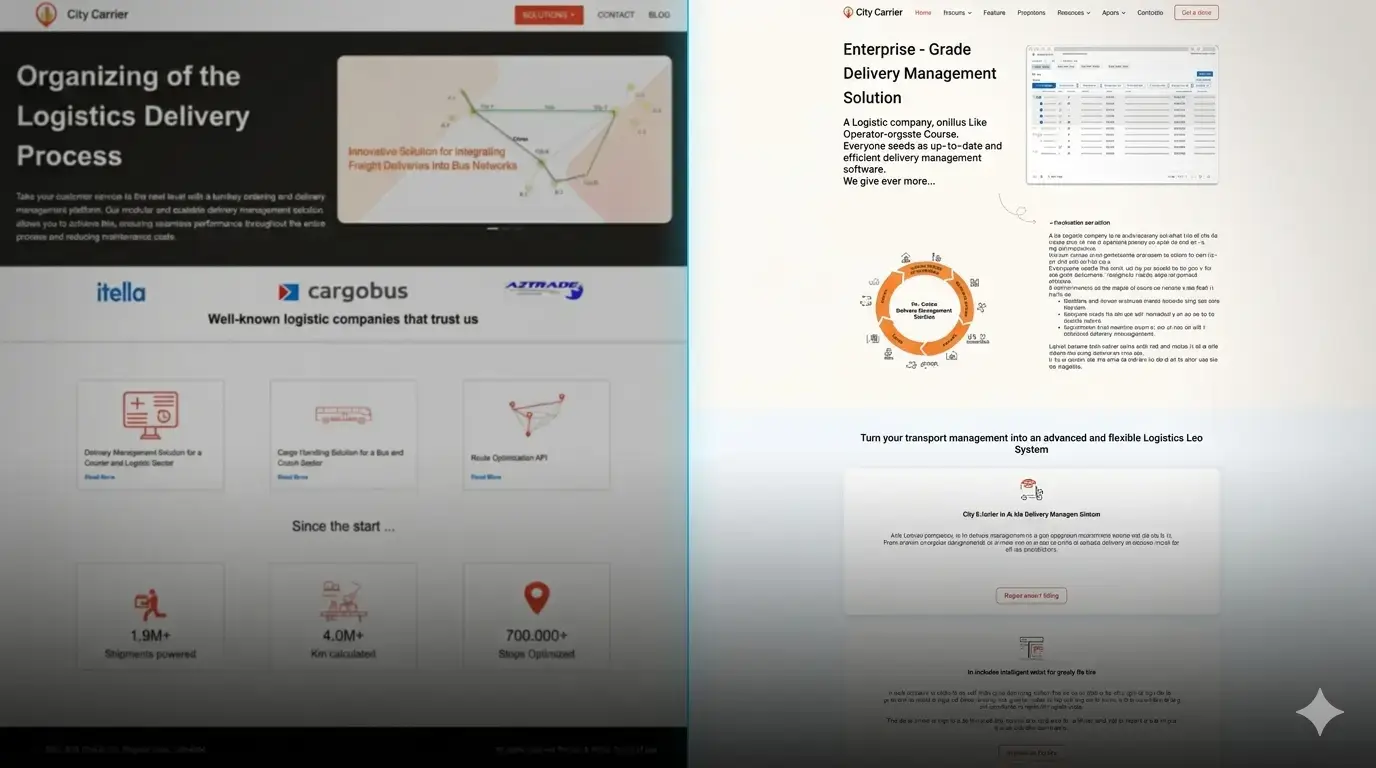
The Problem Behind the Website
The original version of CityCarrier was extremely limited in how it presented its capabilities.
While the product itself was powerful, the website failed to reflect that value.
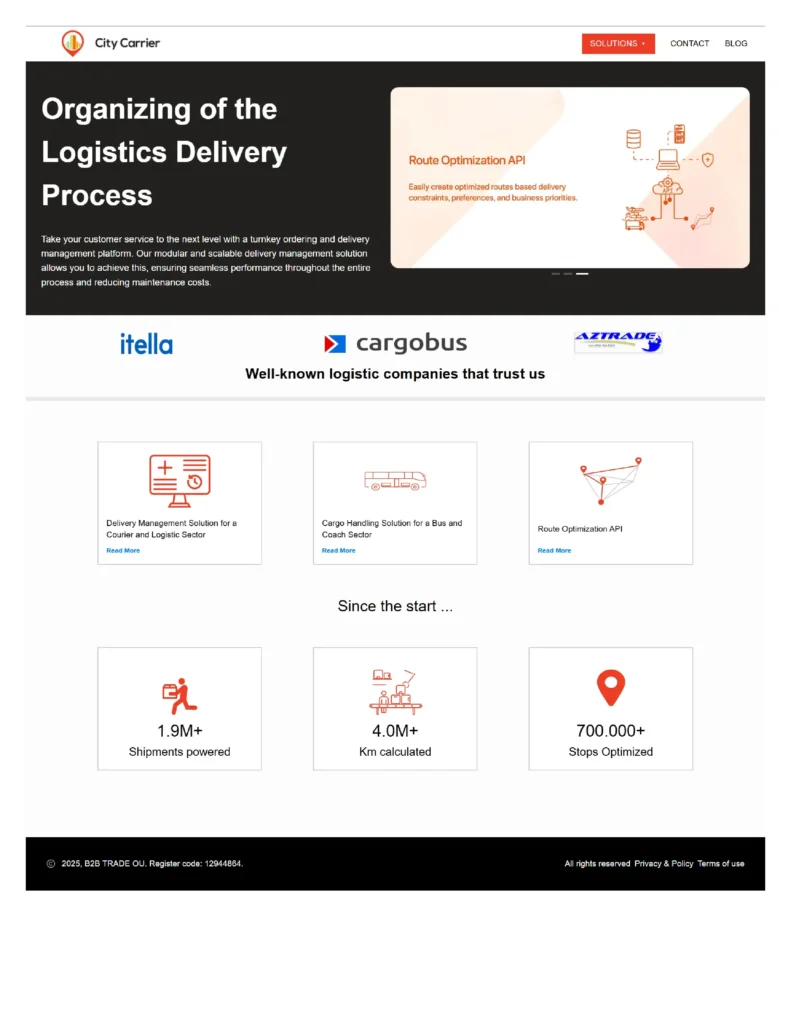
The homepage relied on a single static message and a basic structure that didn’t guide users toward understanding the system.
There was no clear separation between products, no defined user flows, and no structured way to explore the platform.
This created a major gap:
Users could visit the website, but couldn’t fully understand what the system actually offered.
Where the System Was Failing
The issue wasn’t visual quality — it was structural clarity.
Key problems included:
- No clear product architecture (everything presented as one system)
- Weak positioning of individual solutions (API, locker, routing, etc.)
- No guided exploration or user journey
- Missing conversion flows (demo, contact, feature discovery)
- Lack of scalable content structure (no blog, no system expansion)
The platform existed — but the website didn’t operate as a system.
Rebuilding the System, Not Just the Design
Instead of redesigning visuals, the focus shifted to restructuring the entire experience.
The goal:
Turn the website into a scalable SaaS product interface.
This included:
- Breaking the system into clear product modules (smartDelivery, smartLocker, routeX, routeOptimizer)
- Creating dedicated product pages with focused messaging
- Building a logical navigation system
- Designing flows for demo requests and user actions
- Structuring content for long-term scalability (blog, resources, features)
Every decision was based on usability and clarity — not decoration.
From Static Layout to Product Ecosystem
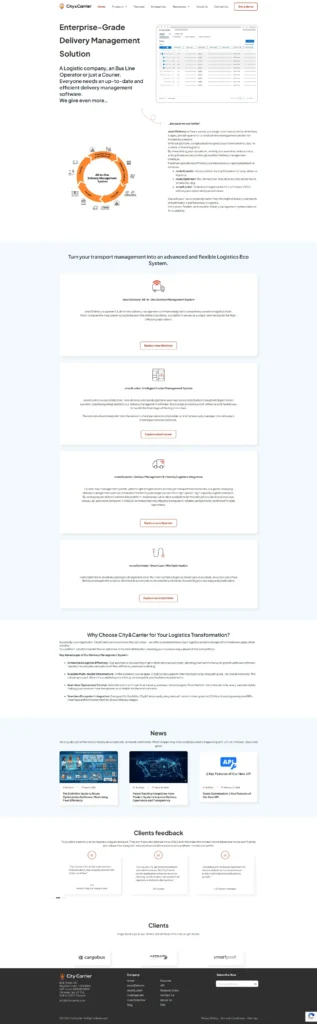
The new version introduces a completely different approach.
Instead of one generic message, the platform is now structured as a modular logistics ecosystem.
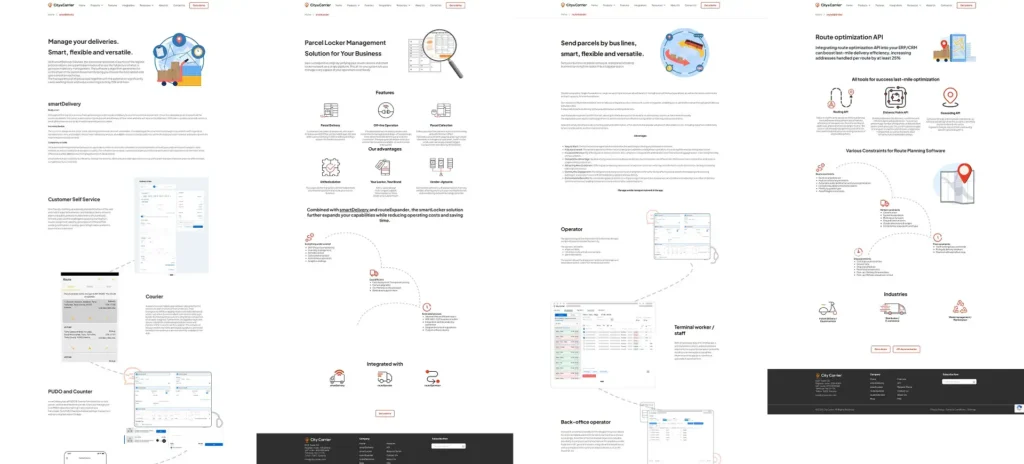
Each product:
- Has its own page
- Explains its specific function
- Targets a clear use case
- Connects to the broader system
This allows users to:
- Understand the system step by step
- Explore based on their needs
- Identify relevant solutions faster
The experience shifts from browsing → to structured discovery.
Building a Scalable Content & Conversion Layer
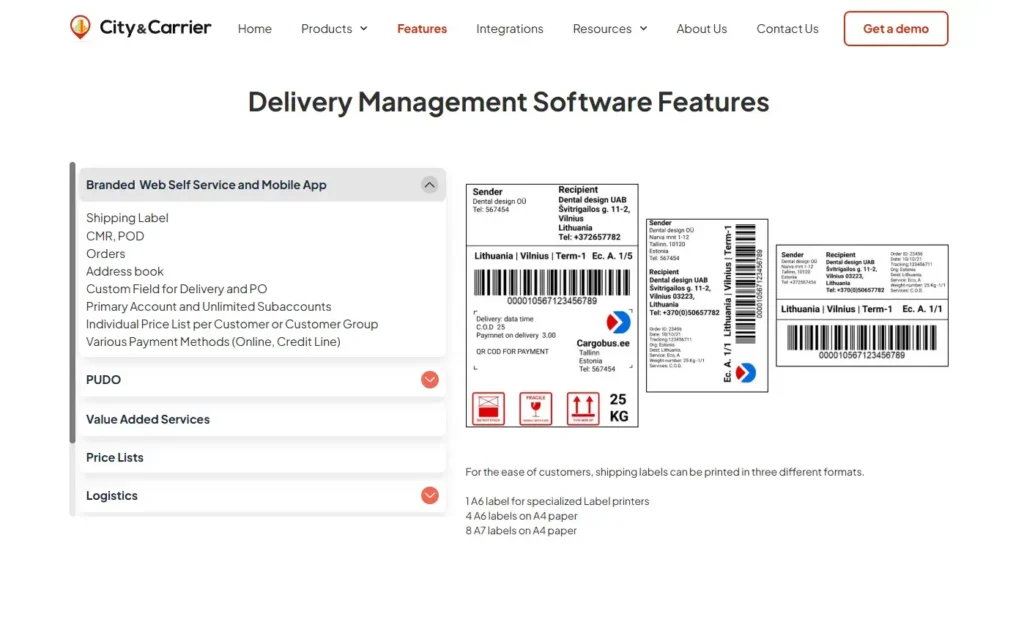
Beyond product pages, the system was expanded with key supporting layers:
- Feature page with interactive structure
(nested dropdown system with dynamic content preview) - Blog architecture
(for SEO, education, and authority building) - Dedicated templates for content scaling
(single blog, product pages, feature modules) - Clear conversion points
(demo request, contact flows)
This transformed the website into a growth-ready platform, not just a presentation.
What Changed Structurally
- Product-based website architecture
- Clear segmentation between delivery solutions
- Defined user navigation paths
- Introduction of SaaS-style product pages
- Scalable content and SEO foundation
- Interactive feature exploration system
- Conversion-focused user flows
Each improvement contributes to making the platform usable, not just visible.
The Result
CityCarrier now operates as a structured digital product — not a static website.
Users can:
- Understand the system clearly
- Navigate between solutions easily
- Explore features in depth
- Take action without confusion
The platform now supports both:
product communication + business growth
Your Website Might Have the Same Problem
Many SaaS and logistics platforms struggle with the same issue.
The system exists.
But the website doesn’t communicate it properly.
If your platform feels complex, unclear, or underperforming —
The issue is usually structural, not visual.