
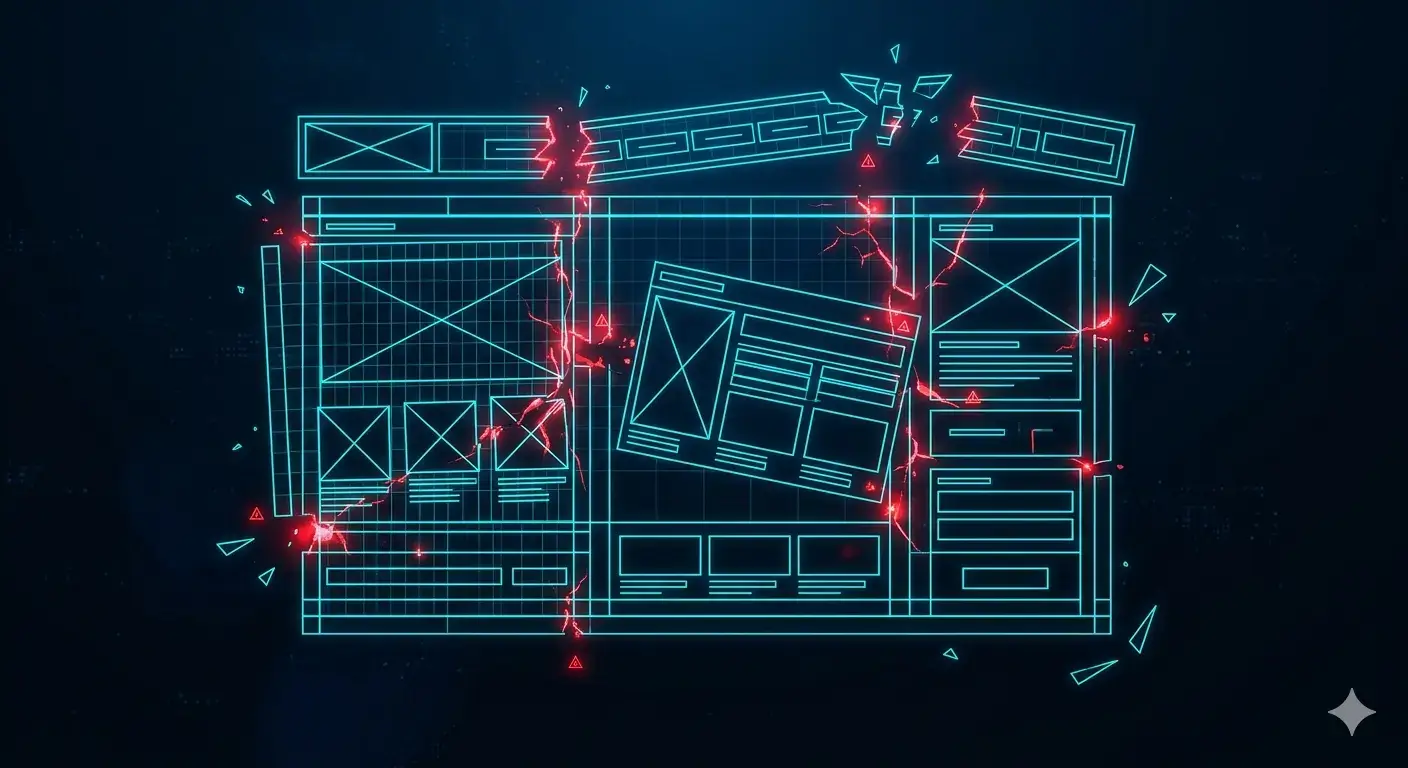
Most businesses think their website project starts with design.
It doesn’t.
It starts with website strategy planning.
And this is exactly where most projects quietly break.
No clear structure.
No defined flow.
No system behind decisions.
So even if the final website “looks good,” it underperforms.
Because it was never built to work.
Most businesses don’t realize they’re operating without a system behind their website, which leads to disconnected workflows and missed opportunities. This is exactly what happens when your website has no system behind it.
And by the time you realize something is wrong, you’re already working on version two.
Website Strategy Planning Is Not a Checklist
Many teams approach website planning strategy like this:
- Choose a theme
- Add pages
- Write some content
- Launch
This is not website strategy planning, this is guesswork with a deadline.
But that’s not a strategy.
That’s assembly.
Real website strategy planning defines:
- How users move through the system
- Where decisions happen
- How trust is built
- How conversion is triggered
Without this, your website becomes a disconnected interface.
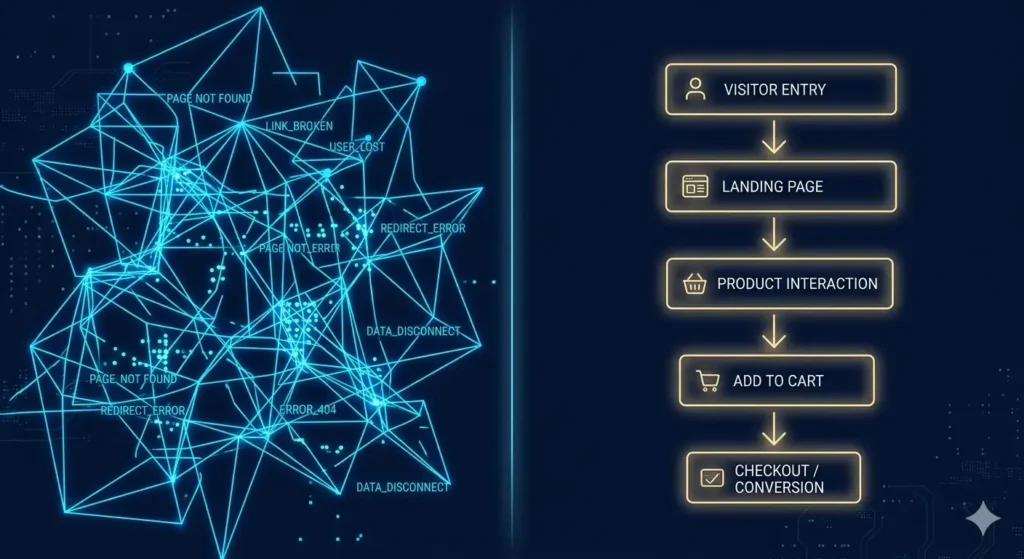
Most companies still treat websites like static pages instead of structured systems that guide users through decisions. That’s why understanding the core systems behind a business website is critical.
The Real Reason Website Projects Fail Early
Most website project failure happens before development even begins.
Because:
- No clear business goal mapping
- No funnel structure
- No user journey definition
- No conversion logic
- No system thinking
You’re not building a website.
You’re building assumptions.
If your website feels untrustworthy, it’s often a structural issue.
Trust is not something you add visually at the end. It is built into the structure, flow, and logic of how your website operates.
Structural Gaps That Kill Performance
When website strategy planning is weak, you see:
- Random page hierarchy
- Confusing navigation
- Mixed messaging
- No clear CTA flow
- Broken trust signals
These are not design problems.
They are architectural problems.
Most revenue issues come from hidden structural leaks.
These issues are often misdiagnosed as design problems, while in reality they are conversion problems caused by structural gaps.
Website Architecture vs Visual Design
A beautiful website can still fail.
This is why design without a clear strategic foundation often turns into expensive decoration instead of a revenue-generating system.
Because:
The design shows how it looks.
Strategy defines how it works.
Without proper website architecture planning:
- Users get lost
- Decisions get delayed
- Drop-offs increase
And conversion rate drops — silently.
Strategy Defines the Funnel Before Design
Before a single pixel is designed, you should know:
- Where traffic lands
- What action is expected
- What builds trust
- What removes friction
- What drives conversion
This is a conversion strategy website planning.
Not decoration.
Your website should work like a system, not a brochure.
The Cost of Skipping Strategy
When website strategy is ignored:
- Development takes longer
- Revisions increase
- Costs grow
- Performance drops after launch
And the worst part?
You don’t fix it with a redesign.
You fix it by rebuilding the system.
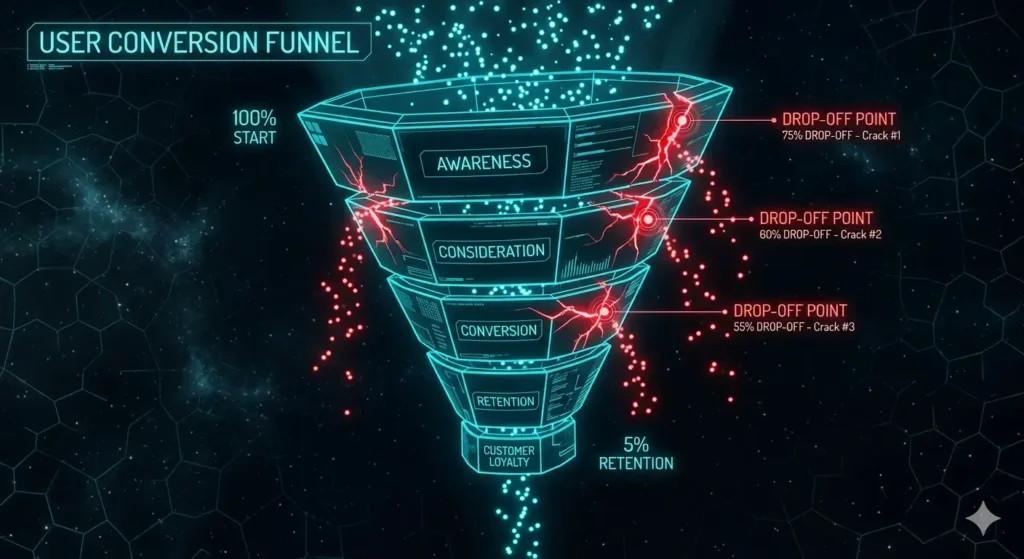
What Proper Website Strategy Planning Looks Like
A strong business website strategy includes:
- Clear funnel structure
- Defined user flows
- Page-level purpose
- Conversion paths
- Integrated system thinking
Every page has a role.
Every section has intent.
Every action has a purpose.
A well-defined website strategy planning process doesn’t just improve conversion — it simplifies everything that comes after.
Design becomes clearer. Development becomes faster. Content becomes more focused. And most importantly, every part of the website starts working together instead of competing for attention.
This is the difference between a website that exists and a website that performs as a system.
When structure, performance, and user flow are aligned, websites not only convert better but also perform faster and more reliably.
Final Thought
Website projects don’t fail because of bad execution.
They fail because of weak website strategy planning.
Before you build:
Define the system.
Map the journey.
Structure the flow.
Because performance is not added later.
It’s designed from the beginning.

If your website already feels slow, confusing, or underperforming, the issue is rarely visual — it’s structural, strategic, and often hidden in performance layers.
Not Sure If Your Website Strategy Is Solid?
👉 Or Explore How We Build Systems