

In the competitive B2B landscape, the default reaction to a dip in sales is almost always to “increase the marketing budget.” Companies pour thousands into LinkedIn ads, SEO agencies, and PPC campaigns, hoping that more traffic will solve the problem. However, this approach often overlooks a fundamental truth: if your infrastructure is broken, more traffic only highlights your inefficiency. Focus on website optimization revenue instead of top-of-funnel volume to see a more significant, sustainable impact on your bottom line.
The Leaky Bucket: Why Marketing Alone Fails
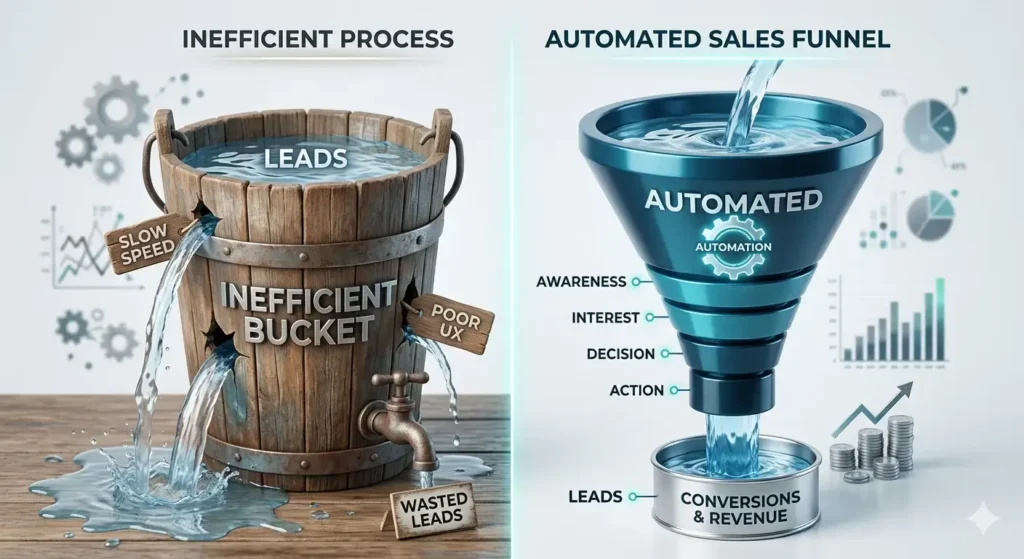
Marketing is designed to bring people to the door. But if the door is locked, or if the hallway leads to a dead end, that marketing spend is effectively wasted. Most businesses suffer from leaky bucket marketing—the practice of pouring expensive traffic into a platform that loses potential clients at every stage of the journey.
When you shift your focus toward website optimization revenue, you aren’t just looking for more clicks; you are looking to maximize the value of every single visitor you already have. By fixing the 5 structural problems that reduce website revenue, you create a foundation where every dollar spent on marketing works five times harder.
Conversion Flow Automation: The Silent Sales Closer
One of the most critical aspects of modern optimization is conversion flow automation. A website should not be a static brochure; it should be an active participant in your sales team. This involves creating automated pathways that guide a user from “curious visitor” to “qualified lead” without manual intervention.
Strategic automation ensures that your conversion psychology is built directly into the user interface. When a visitor engages with a specific case study, the system should automatically present relevant proof points or a tailored call-to-action. This level of responsiveness creates a premium user experience that traditional, static websites simply cannot match.
Improving Sales Handling Efficiency through Systems
For many service-based businesses, the “leak” happens after the lead has been submitted. If your lead handling relies on manual processes, you are losing money. By implementing advanced lead flow systems, you ensure that high-value inquiries are instantly sent to the right department.
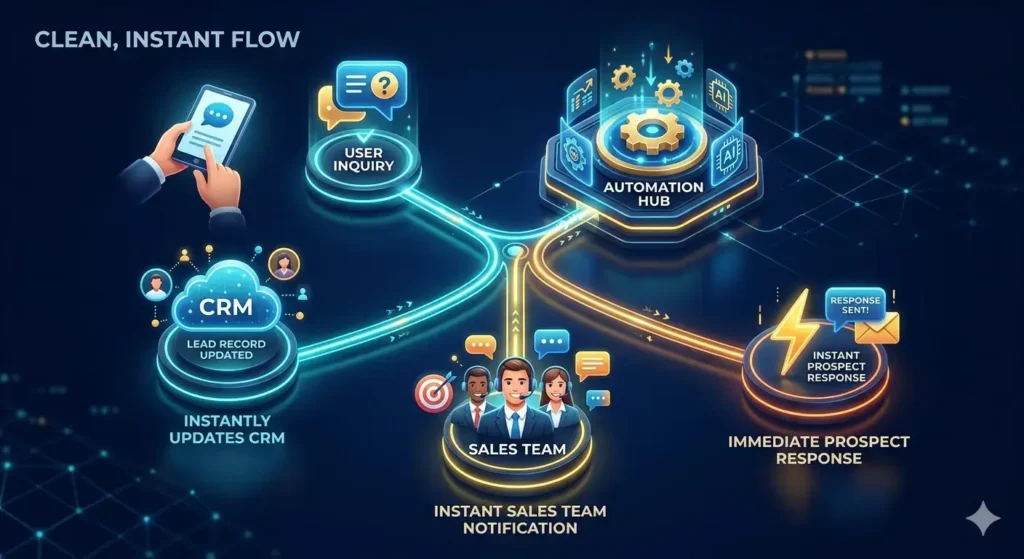
These automated lead routing protocols ensure the prospect receives an immediate response, improving sales handling efficiency and dramatically increasing the likelihood of a closed deal. In a high-stakes B2B environment, the first company to respond wins the business 50% of the time.
Why Structural Gaps Are Costing You More Than Ad Spend
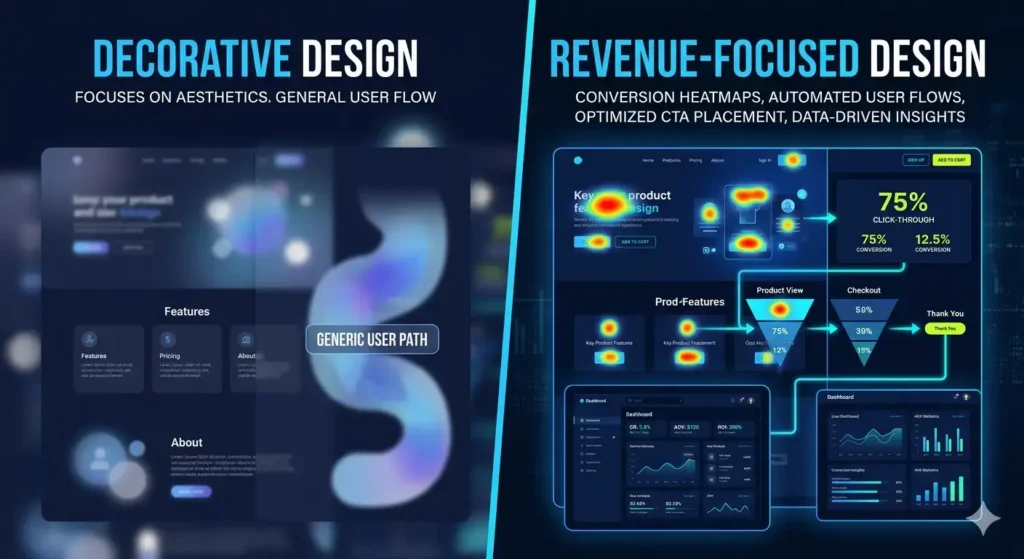
A common mistake is treating website performance as a “technical” issue rather than a “business” issue. Transitioning to a revenue-focused design model allows you to prioritize user behaviors that contribute directly to your margin, rather than just chasing aesthetic trends. However, website performance optimization is directly tied to your ROI. If your site takes four seconds to load, your marketing costs effectively double because half your audience bounces before they even see your headline.
To truly fix this, you must look at your website system architecture. This means moving away from a collection of “pages” and moving toward an integrated system of conversion. This structural shift is what differentiates a “pretty website” from a high-performing revenue engine.
Building Trust Through Technical Excellence
Trust is the primary currency of the internet. When you prioritize website optimization revenue, you are making a commitment to technical excellence. This involves a deep conversion rate diagnosis
to identify where users feel hesitant. Addressing these friction points—whether they are slow load times or confusing navigation—is the only way to protect your B2B website performance ROI. By ensuring essential trust signals are present, you remove the barriers that have been quietly killing your marketing effectiveness for years.
Conclusion: The Strategic Pivot
The math is simple: if you double your conversion rate through optimization and automation, you effectively halve your customer acquisition cost. In the long run, building a robust, automated system is always more profitable than buying more traffic for a broken one. Stop chasing more users and start building a better system.
Is Your Website Actually Ready for Traffic?
Most marketing budgets are wasted on sites that aren’t built to convert. Let us run a structural diagnosis to identify the bottlenecks holding back your revenue.