

Revenue Loss Starts Where Manual Processes Begin
Most websites do not fail because of design.
They fail because nothing happens after a user arrives.
A website automation system changes this completely.
Instead of relying on users to figure things out, the system begins guiding them:
- showing relevant actions
- triggering responses
- reducing decision effort
Without automation, every step depends on user initiative.
With automation, the system carries part of the decision.
This is where revenue starts to shift.
Most businesses underestimate how early this loss begins.
It is not at checkout. It is not even at the decision stage.
It starts the moment a user feels uncertainty.
A delay, a missing signal, or an unclear next step is often enough to break momentum.
This is where a website automation system changes the outcome.
Instead of relying on the user to figure things out, the system begins to guide, support, and respond.
That shift alone can turn passive visits into measurable movement.
Automation Creates Structured User Flow
Conversion is not a single action.
It is a sequence.
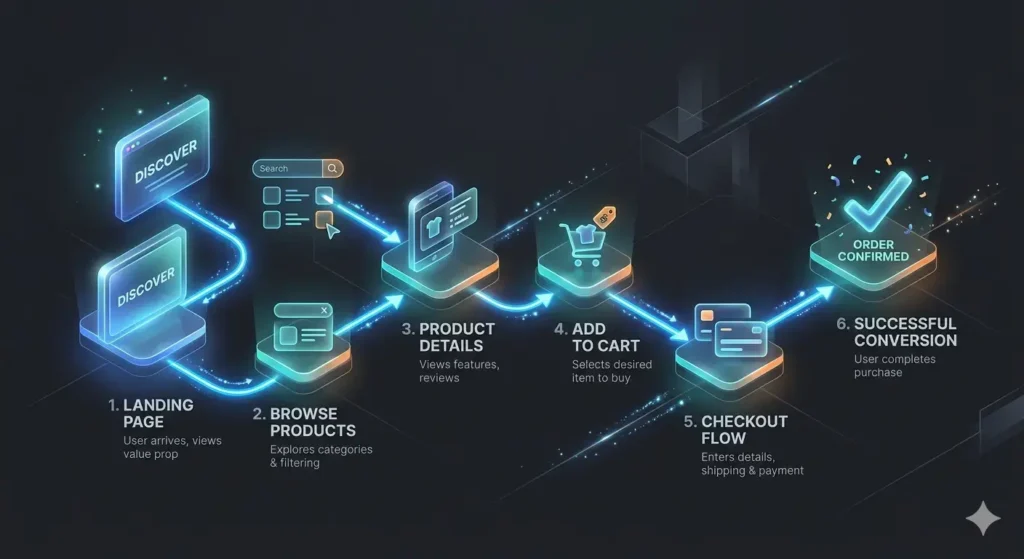
Without this structure, even interested users struggle to move forward.
They may understand the offer, but still hesitate because the path is not clear.
A structured flow removes that hesitation by reducing cognitive effort.
Users no longer need to think about what to do next.
The system makes that decision easier for them.
This is where automation starts acting as a silent guide rather than a visible feature.
Landing → understanding → trust → decision → action.
A website automation system ensures this sequence does not break.
Examples:
- dynamic CTAs based on behavior
- automated form responses
- guided navigation paths
- triggered follow-ups
Without automation, users move randomly.
With automation, they move intentionally.
Data Collection Is the Hidden Revenue Layer
Most businesses collect data but do nothing with it.
A real website automation system turns data into action.

This includes:
- tracking user behavior
- segmenting visitors
- triggering personalized responses
For example:
A returning user should not see the same message as a first-time visitor.
Automation allows your website to react, not just display.
Automation Removes Decision Friction

Friction is the biggest silent conversion killer.
Users hesitate when:
- next steps are unclear
- responses are delayed
- actions feel uncertain
A website automation system removes this friction by:
- guiding users step by step
- providing instant feedback
- reducing waiting time
This is especially critical in booking or lead-based businesses.
Speed + Automation = Conversion Acceleration
Speed alone improves performance.
But speed with automation multiplies it.
A fast site loads quickly.
An automated site moves users forward.
Together, they create momentum.
A website automation system ensures:
- no delay between steps
- no confusion in actions
- no gaps in communication
Speed removes the initial barrier, but automation ensures users don’t lose momentum after that.
Without automation, even a fast website can still feel directionless.
Users move quickly, but not necessarily in the right direction.
A system that combines both speed and automation creates not just movement, but progress.
Automation Builds Trust Without Asking For It
Trust is not built only with design.
It is built through experience.
When a system responds instantly, behaves predictably, and guides clearly — it feels reliable.
A website automation system creates:
- consistent interactions
- structured responses
- predictable outcomes
This reduces uncertainty.
Manual Websites Cannot Scale
Manual processes break under growth.
More traffic = more chaos.
Without a website automation system:
- leads get lost
- responses slow down
- opportunities disappear
Automation creates scalability.
It allows your website to handle growth without losing structure.
Automation Is Not a Feature. It Is Infrastructure.
Most businesses treat automation as an add-on.
It is not.
A website automation system is part of the core architecture.
Without it:
- systems remain reactive
- users carry the burden
- conversion depends on luck
With it:
- the system takes control
- decisions become easier
- revenue becomes predictable
Turn Your Website Into a Predictable Revenue System
If your website gets traffic but doesn’t generate consistent results, the issue is not visibility — it’s structure.
A website automation system rebuilds that structure to guide users, remove friction, and turn visits into measurable outcomes.
Start Your Automation System Project
Explore Conversion-Focused Systems