

The Revenue Layer Most Websites Are Missing
Most businesses invest in design, traffic, and branding.
But very few invest in website revenue optimization.
That’s why many websites look impressive — yet underperform financially.
Because revenue is not created by pages.
It’s created by systems.
And most websites are missing that system layer entirely.
Website Revenue Optimization Is Not About Design
When people think about improving their website, they focus on visuals.
Better UI. Cleaner layout. Modern style.
But design alone does not improve revenue.
Website revenue optimization is about how users move, decide, and convert.
It’s about:
- How leads are captured
- How decisions are guided
- How actions are triggered
- How follow-ups are handled
A visually strong website can still fail if the system behind it is weak.
This is why many businesses experience what we explain in
“Why Website Is Not Converting (Even With Traffic)” — traffic exists, but revenue doesn’t.
The Missing Layer: Conversion Flow Systems
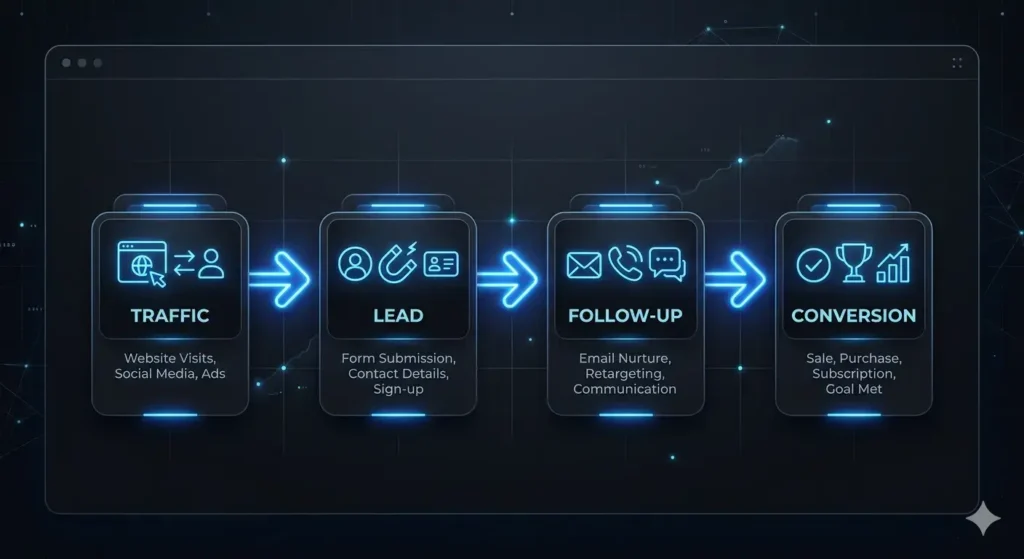
Every high-performing website has an invisible layer:
A structured conversion system.
This system connects:
- Traffic → Intent
- Intent → Action
- Action → Follow-up
- Follow-up → Revenue
Without this, users don’t convert — they drop.
Most websites break at key points:
- unclear next steps
- delayed responses
- disconnected pages
- no lead routing
- no automation
These are not design problems.
They are system failures.
As explored in
“Lead Generation Systems vs Static Websites”,
a static website shows information — a system drives outcomes.
Where Revenue Is Quietly Lost

Revenue loss doesn’t happen in obvious places.
It happens in small, invisible gaps.
For example:
- a form submission with no immediate response
- a CTA that leads to a dead-end page
- a delay between inquiry and follow-up
- a lack of clarity in the decision path
These are the same silent issues described in
“The Silent Conversion Leaks in Most Business Websites”.
And they compound.
Each small friction reduces conversion probability.
Together, they create significant revenue loss.
Website Revenue Optimization Requires Automation
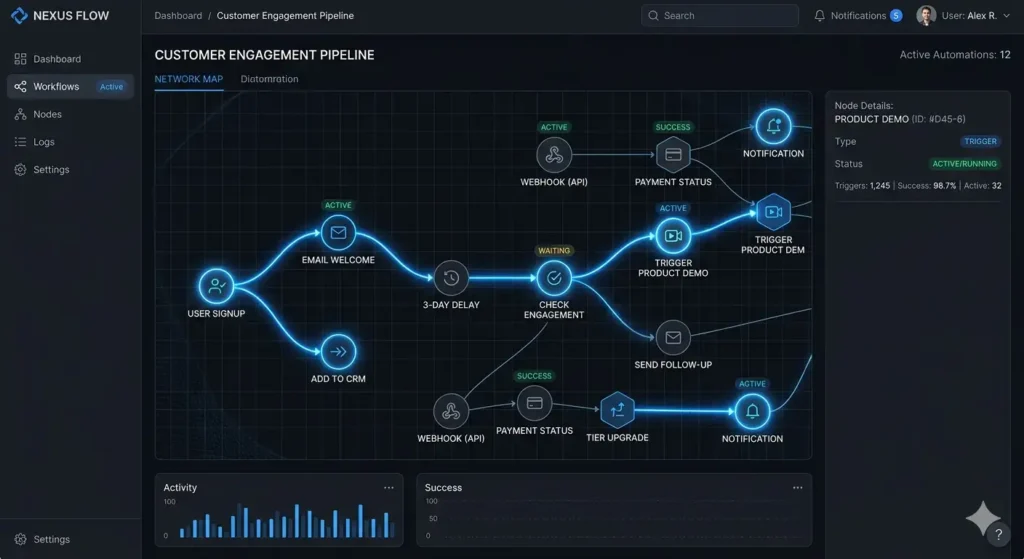
Manual processes are the biggest bottleneck in modern websites.
If your system depends on human response:
- leads are delayed
- opportunities are missed
- consistency breaks
This is where website automation systems become critical.
Automation improves:
- response time
- lead routing
- data handling
- follow-up consistency
For example:
- instant confirmation after form submission
- automatic lead assignment
- structured follow-up sequences
- CRM integration
This transforms your website from a passive tool into an active system.
As explained in
“How Automation Turns Your Website Into a Sales Machine”,
automation is not an add-on — it’s a core revenue driver.
The Role of UX in Revenue Optimization
Even with automation, poor UX can block conversion.
Small decisions matter:
- button placement
- form structure
- content clarity
- step transitions
These micro-frictions are discussed in
“How Micro UX Decisions Destroy Conversion”.
Users don’t consciously notice them.
But they affect behavior.
Good UX does not just look clean.
It reduces effort, increases clarity, and guides action.
Data Turns Assumptions Into Revenue Insights
Most businesses rely on assumptions:
- “Users understand this section”
- “This CTA is clear enough”
- “This flow works”
But without data, these are guesses.
Website revenue optimization depends on measurable behavior:
- drop-off points
- click patterns
- conversion paths
- response timing
This is why audits matter.
As shown in
“Why Website Audits Reveal Problems You Didn’t Know Existed”,
real performance is often very different from perceived performance.
From Website to Revenue System
A website becomes a revenue system when:
- every page has a purpose
- every action leads somewhere
- every lead is handled instantly
- every step is optimized
This is the difference between:
A digital brochure
and
A structured business tool
This transformation is what we break down in
“Website System Architecture: From Brochure to System”.
The Real Goal: Predictable Revenue
Traffic is unpredictable.
Design trends change.
But systems create consistency.
Website revenue optimization is not about increasing visits.
It’s about increasing outcomes per visit.
When your system works:
- more users convert
- fewer leads are lost
- revenue becomes predictable
And that’s where real growth happens.
Find What’s Blocking Your Revenue
Most websites don’t have a traffic problem — they have a system problem.
We identify where your conversion flow breaks and how to fix it.