

Before You Blame Traffic, Check the System Behind the Website
Your website losing money is not always obvious. It may still look modern, receive visitors, and generate the occasional enquiry. The problem is usually hidden inside small gaps: weak trust signals, unclear offers, broken lead flow, and follow-up that happens too late.
For service-based businesses, a website is not only a digital brochure. It should guide the visitor from interest to action, then help your team handle that action without friction. When that flow is not designed properly, money leaks quietly every day.
1. Visitors Arrive, But the Page Does Not Move Them Forward
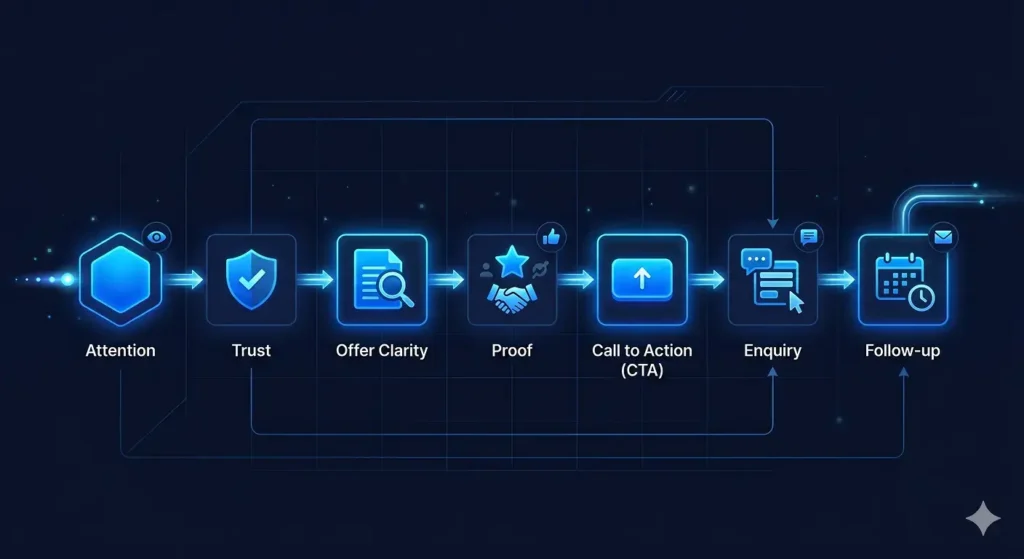
Traffic is not revenue until the visitor understands what to do next. Many websites explain the business, but they do not create a clear customer decision flow.
A strong page should answer three questions fast: what you offer, why it matters, and what the visitor should do now. If the hero section is vague, the CTA is weak, or the content feels like a company profile, users may leave before they understand the value.
This is where a conversion-focused website matters. The structure should lead users through pain, solution, proof, offer, and action — not random sections placed for decoration.
2. Trust Gaps Make People Hesitate
A website can be losing money even when nothing is technically broken. If people hesitate, compare, or leave to “think about it,” the issue may be trust.
Missing testimonials, unclear process explanations, weak service details, poor visuals, or inconsistent design can make a business feel less reliable than it actually is. Users rarely say they lost confidence. They simply close the tab.
Trust is built through structure: clear promises, visible proof, transparent next steps, and design consistency across the whole page.
3. Slow Pages Reduce Buying Intent
Website speed is not only a technical score. It affects patience, confidence, and action. A slow website creates friction before the user even reads the offer.
Use Google PageSpeed Insights to check loading issues, but do not stop at the score. Real website performance should be measured by how quickly users can see, understand, and act on your offer.
Look at the real experience: hero loading, image weight, mobile spacing, button response, and how quickly the visitor can understand the page.
When performance feels heavy, users often leave before analytics can show the full damage.
4. Leads Enter, Then Get Lost

One of the biggest hidden leaks is poor lead handling. A form submission is not the end of the journey. It is the beginning of the sales process.
If leads go only to email, are not categorized, or wait hours for a reply, the website losing money problem continues after the conversion. Competitors who respond faster often win, even with a weaker offer.
This is where lead flow automation matters. Website forms, WhatsApp clicks, booking requests, CRM updates, and internal notifications should work together. The faster your team sees the right lead with the right context, the higher the chance of conversion.
5. Manual Work Slows Down Sales Efficiency
Manual processes create invisible revenue loss. Someone has to copy data, check availability, send the same message, update a sheet, or remind another team member.
A website automation system reduces these delays. It can route leads, trigger confirmation emails, collect structured data, notify the right person, and keep the sales process moving.
Automation does not replace strategy. It protects the strategy from repetitive work.
6. Analytics Show Numbers, But Not the Real Leak
Many businesses track traffic but not behavior. They know how many people visited the site, but not where users lost interest.
To find where your website is losing money, track key points: CTA clicks, form starts, form completions, scroll depth, phone clicks, booking steps, and abandoned enquiry flows. This turns vague assumptions into practical decisions.
A high-exit section may reveal unclear copy. A low CTA click rate may reveal weak offer positioning. Data becomes useful when it is connected to the page structure.
7. The Website Is Not Connected to Business Operations
A website becomes more profitable when it supports the business behind it. That means the page, forms, CRM, booking process, emails, tracking, and sales follow-up should work as one system.
Disconnected tools create delays and missed opportunities. Connected systems create clarity. Every enquiry has a destination. Every action has a next step.
Conclusion
A website losing money rarely announces the problem clearly. It usually leaks revenue through slow pages, weak trust, unclear structure, poor follow-up, and disconnected systems.
The fix is not always a full redesign. Sometimes the biggest improvement comes from tightening the customer decision flow, improving trust, connecting tools, and adding smart automation around the sales process.
A profitable website is not just a page people visit. It is a system that helps visitors decide, act, and move closer to becoming customers.
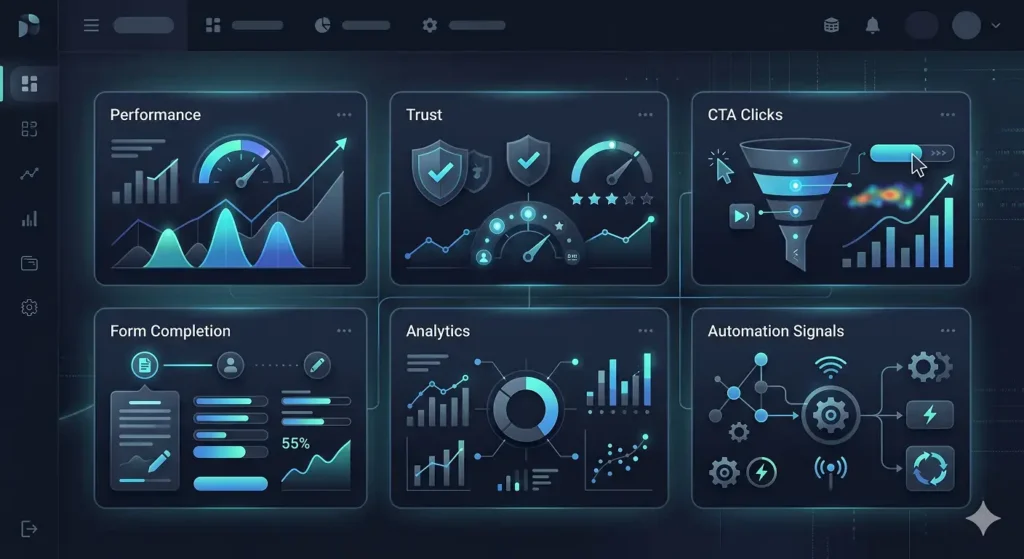
Stop Letting Small Website Leaks Reduce Revenue
Your website may not need a complete redesign. It may need a clearer conversion flow, faster lead handling, stronger trust structure, and smarter automation around the sales process.