

Most businesses don’t realize their website is not broken — it’s incomplete.
They invest in design, pages, and content. But they miss the one thing that actually drives results: a website structure strategy built as a system.
That’s why traffic doesn’t convert. Leads don’t flow. And growth stalls.
Because a website made of pages is static.
A website built as a system performs.
Pages Inform. Systems Convert.
A page-based website is built to present information.
A system-based website is built to move users.
Most websites look like this:
- Homepage
- About page
- Services
- Contact
But nothing connects them strategically.
There is no controlled user journey, no guided next step, no flow.
This is exactly why many businesses experience what we break down in
“Why Website Is Not Converting (Even With Traffic)” — the structure doesn’t support decisions.
A strong website structure strategy transforms isolated pages into a connected flow.
The Hidden Problem: No Flow Between Pages
Users don’t navigate websites logically. They scan, hesitate, and decide quickly.
If your structure doesn’t guide them:
- They get lost
- They delay decisions
- They leave
This is where most “beautiful” websites fail.
As explained in “Design vs Trust: Why Beautiful Websites Still Fail to Convert”, design alone doesn’t create momentum.
Structure does.
A proper system:
- Anticipates user questions
- Removes friction step-by-step
- Leads users toward action
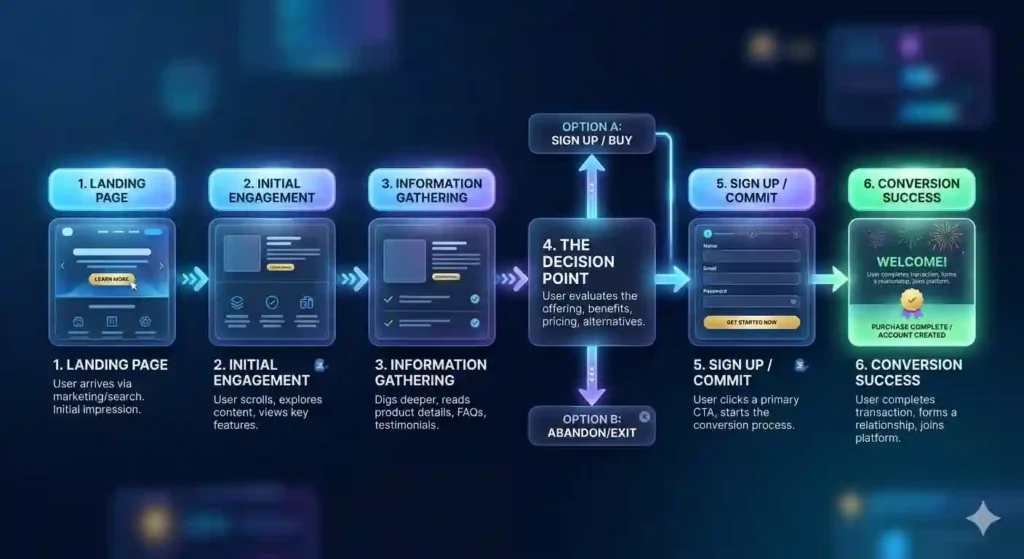
Website Structure Strategy Creates Conversion Flow
A real system connects:
- Entry point → decision point → action
Instead of:
- Page → page → exit
This is what defines a conversion-focused website.
For example:
- A landing page connects to a service explanation
- That connects to proof
- That leads to a structured CTA
This eliminates confusion and builds confidence.
It also aligns with what we cover in
“Conversion Rate Diagnosis: 7 Critical Checks for a Low-Converting Website” — most issues come from broken flow, not lack of traffic.
Systems Enable Automation and Scalability
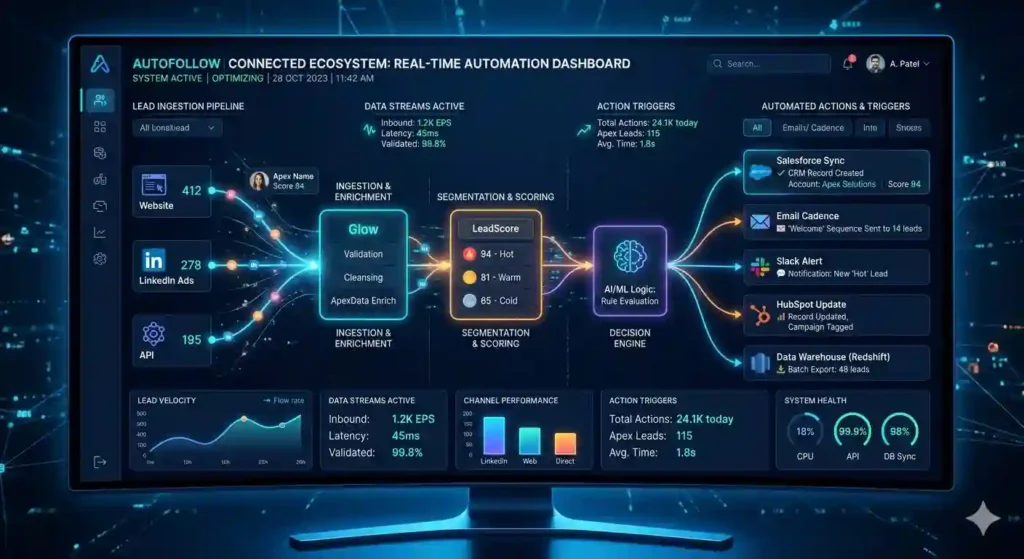
When your structure is strategic, automation becomes possible.
Without structure:
- Leads are inconsistent
- Follow-ups are manual
- Data is fragmented
With a system:
- Leads are captured and categorized
- User actions trigger responses
- Data flows into decisions
This is the foundation of a website automation system.
As shown in “How Automation Turns Your Website Into a Sales Machine”, automation only works when the structure supports it.
Trust Is Built Through Structure
Trust is not created by testimonials alone.
It’s created by clarity.
Users trust websites that:
- Guide them clearly
- Answer questions in sequence
- Reduce uncertainty
This aligns directly with
“Website Trust Signals: Trust Is a Structural Layer, Not a Design Element”.
A strong website structure strategy:
- Places proof at the right moment
- Reinforces decisions
- Removes doubt before action
Performance Issues Are Often Structural
Many businesses focus only on speed.
But performance is not just technical — it’s structural.
Even fast websites fail when:
- Navigation is unclear
- Content hierarchy is weak
- Decision paths are broken
As discussed in
“The Hidden Cost of Website Performance Issues”, poor structure creates invisible losses.
A system fixes not just speed, but behavior.
Pages Don’t Scale. Systems Do.
Adding more pages does not improve performance.
It increases complexity.
A system, however:
- Organizes content
- Prioritizes actions
- Maintains clarity at scale
This is why scalable businesses invest in
website system architecture, not just design.
Conclusion
A website without structure is a collection of pages.
A website with strategy is a revenue system.
The difference is not visual.
It’s structural.
If your website is not converting, it’s not because of traffic.
It’s because there is no system behind it.

Turn Your Website Into a Conversion System
If your website feels active but not effective, the issue is not traffic — it’s structure. A system-based approach transforms how users move, decide, and convert.