

Before You Build Traffic, Define the Website’s Job
A business website strategy starts with one question: what should the website help a company do after a visitor arrives? A marketing website attracts attention. It explains the brand, presents services, supports SEO, and creates awareness. A business website goes further. It connects traffic, trust, lead capture, sales process, automation, and follow-up into one working system.
This difference matters because many service businesses already have a website that looks fine. The problem is not always design. The problem is that the website does not support the actual customer journey. Visitors read, hesitate, leave, or submit a form that no one handles properly. That is not only a design issue. It is a business website strategy issue.
Marketing Website vs Business Website Strategy
A marketing website focuses on visibility. It supports campaigns, SEO content, ads, brand messaging, and first impressions.
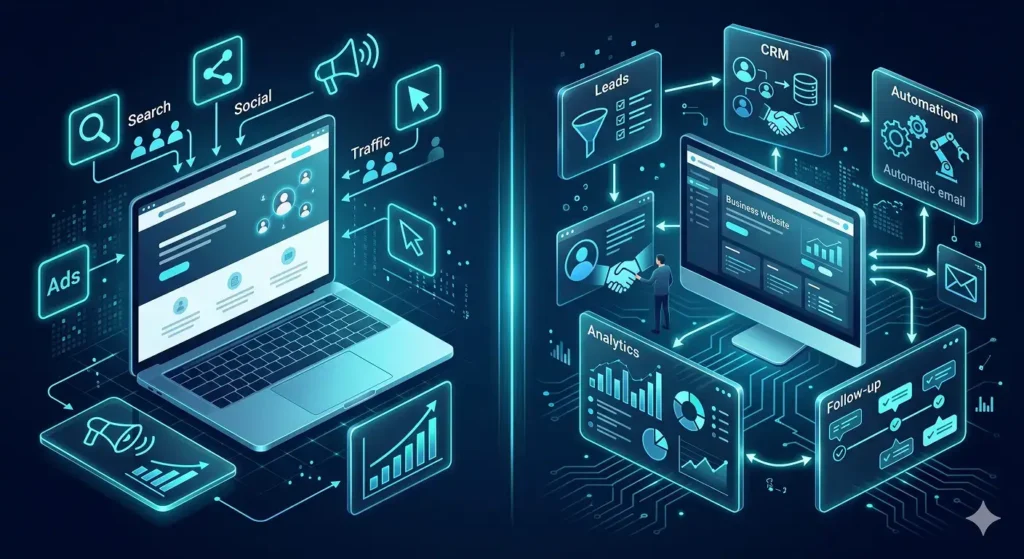
A business website strategy focuses on what happens next. It asks how users move from discovery to decision. It considers service pages, contact paths, quote requests, booking flows, CRM integration, automated lead routing, analytics, and follow-up timing. The website becomes part of operations, not only a digital brochure.
The simplest difference is this: a marketing website brings people in. A business website helps the company convert, manage, and respond to them.
Why Traffic Alone Does Not Create Growth
More traffic does not automatically mean more revenue. If the website structure is weak, visitors may not understand the offer, trust the company, or know what action to take.
For example, a company may invest in seo for business website growth, but the landing page does not answer key objections. Another company may run ads, but the form sends leads to a general inbox with no priority system. A local company may rank well, but its local seo website pages do not match the locations, services, or decision points customers are searching for.
Growth happens when traffic enters a clear system. That system should guide the visitor, reduce confusion, capture the right information, and help the team respond quickly.
What a Business Website Must Support
A business website should support real business actions. It should help visitors compare services, understand value, request help, book a call, submit details, or move into a sales conversation.
For B2B companies, this means the website needs a stronger b2b website strategy. The buyer may need proof, process steps, pricing context, and trust signals. The website should make the decision easier without forcing the user to search.
For local or multi-location businesses, structure is even more important. Strong seo location pages can connect each service area with relevant offers, proof, and contact paths. SEO for multiple locations should not be copy-paste.
Automation Turns the Website Into a Business Tool
Automation is one of the clearest signs that a website is moving from marketing asset to business system. A form should not only collect a name and email. It should send the right notification, tag the lead, route the inquiry, trigger a follow-up, and record the source.
This improves sales efficiency because the team does not rely only on manual checking. It also improves conversion flow because leads are handled while intent is still fresh. When automation is connected with tracking and analytics, the business can see where leads come from and where conversion bottlenecks appear.
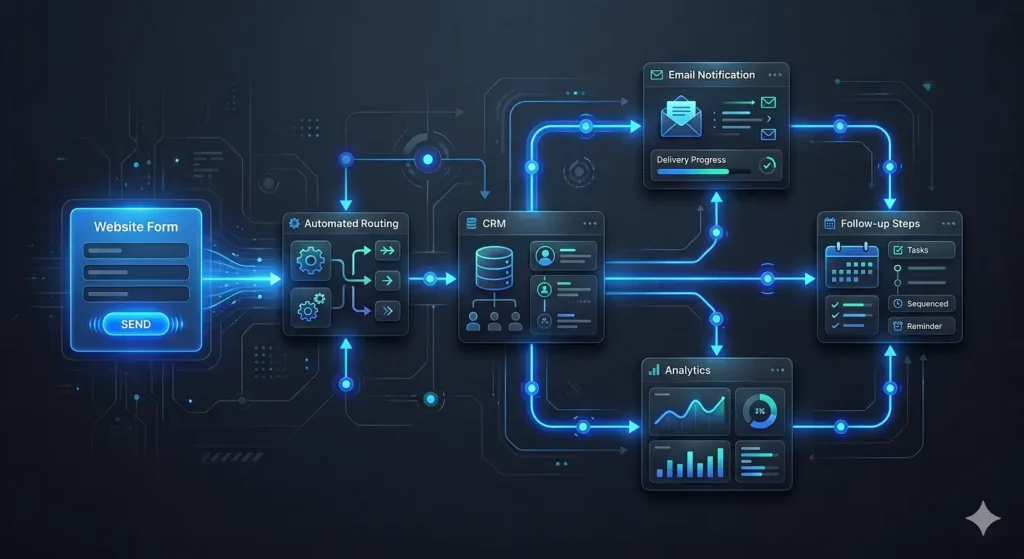
A strong website automation system improves lead flow automation by connecting forms, source tracking, CRM records, notifications, and follow-up steps. This helps the team respond faster while reducing lost or delayed inquiries.
Structure, Trust, and Decision Flow Matter
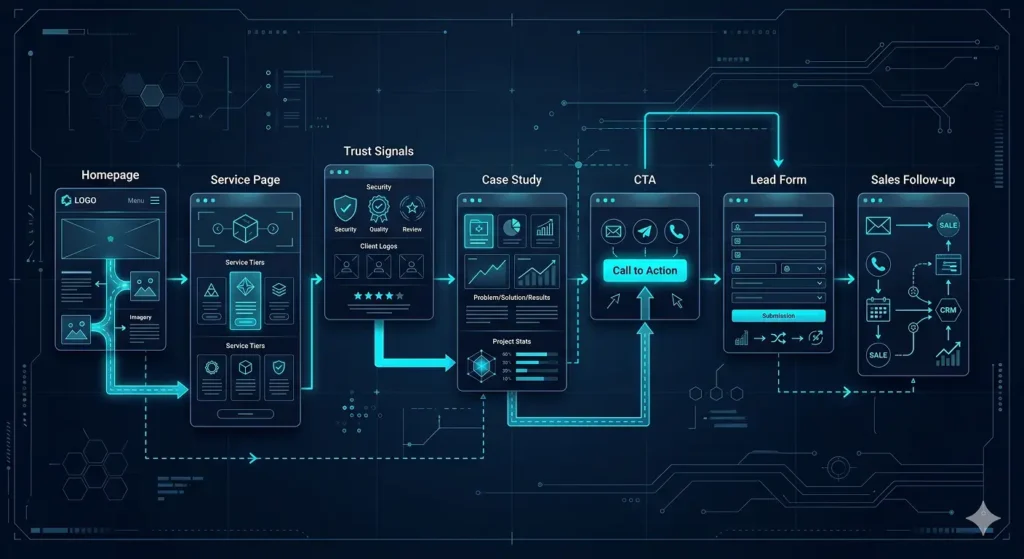
A business website is not only a set of pages. It is a decision path. The homepage creates orientation. Service pages explain value. Insight posts build authority. Case studies reduce risk. CTAs move users toward the next step.
This is why website structure strategy matters. If pages look good but the journey feels disconnected, users may still leave. Trust signals, visual hierarchy, proof, speed, and clear calls to action work together.
You can use Google Search Central and PageSpeed Insights to check visibility and performance, but strategy must connect those checks to the customer journey.
A conversion-focused website is built around the customer decision flow. It does not leave users to guess what matters next. Each section should answer a concern, build trust, and guide the visitor toward a clear action.
The Real Difference
A marketing website says, “Here is what we do.”
A business website says, “Here is how we help, why it matters, what happens next, and how your inquiry will be handled.”
That is the difference between having an online presence and having digital infrastructure. A strong business website strategy connects SEO, content, UX, automation, tracking, and sales flow into one system. The goal is not only to attract visitors. The goal is to make the website easier to trust, easier to use, and easier for the business to turn into revenue.
Turn Your Website Into a Business System
Your website should not only explain your services. It should guide visitors, capture the right leads, connect with your sales process, and help your team respond faster.