
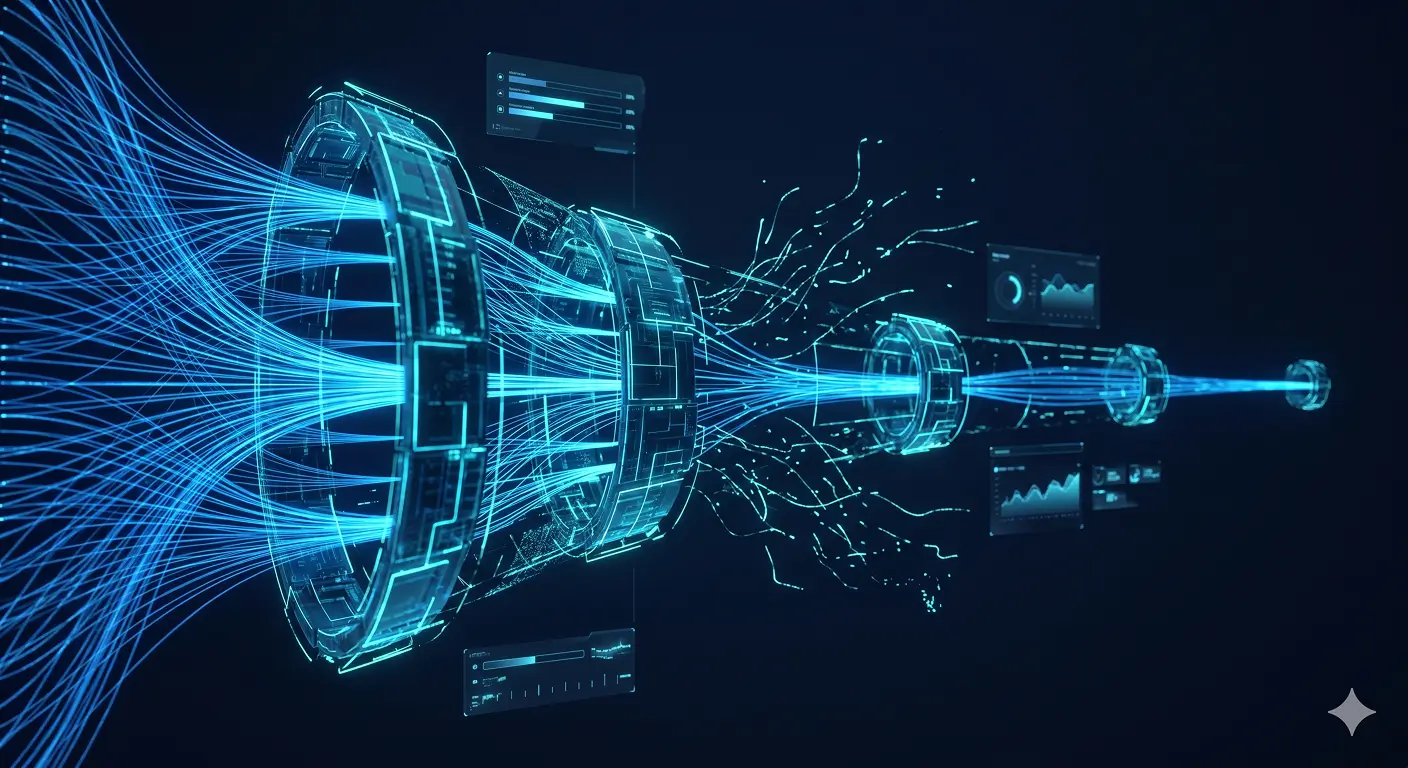
Website traffic vs conversion is the eternal debate that defines the success or failure of a modern digital presence. For years, the prevailing wisdom in the B2B sector has been simple: if you want more sales, you need more traffic. Companies pour thousands of dollars into SEO, PPC, and social media campaigns, only to find that their revenue remains frustratingly stagnant. The reality is that traffic is a commodity, but a high-converting system is an asset.
When we look at the data, we see a recurring pattern: most business websites suffer from “The Leaky Bucket” syndrome. You are pouring water (traffic) into a bucket, but because of structural gaps in your conversion flow, most of that potential revenue leaks out before it reaches your sales team. This is why the focus must shift from vanity metrics like “hits” to the strategic interplay of website traffic vs conversion.
The Infrastructure Gap: Why Traffic Alone Fails

A website without a system is just an expensive digital brochure. When you increase traffic without first fixing your internal architecture, you aren’t growing—you are just scaling your inefficiencies. High-performing B2B websites are built on a foundation of structural excellence. This means that every visitor is guided through a deliberate journey designed to build trust and filter intent.
Without automated lead routing and clear trust signals, your traffic remains anonymous. To truly scale, you must address the structural revenue gaps that quietly drain your marketing budget. If your site isn’t designed to handle visitors with precision, you are essentially paying for people to look at your front door without ever inviting them inside.
Improving Sales Efficiency Through Automation

One of the most significant advantages of focusing on conversion over raw traffic is the improvement in sales efficiency. When a website utilizes website automation systems, the burden of manual lead qualification is lifted from your team. Automation improves customer handling by ensuring that no lead is left behind. By implementing conversion flow automation, you ensure that the journey from an initial click to a final inquiry is frictionless, capturing intent at its highest point.
Think about your current conversion flow. Does a prospect receive an immediate response? Is their data routed to the right department instantly? Automation turns your website into a 24/7 sales machine that never gets tired and never forgets to follow up. This level of sales efficiency is what separates market leaders from those who are constantly “trying” to grow. By automating the conversion flow, you create a seamless transition from a curious click to a qualified sales conversation.
The Strategic Pivot to High-Performance Systems
To win in a competitive market, your website must be more than a destination; it must be a structural layer of your business. This involves a strategic pivot from asking “how do we get more people?” to “how do we better serve the people we already have?”
Optimizing your conversion flow requires a deep understanding of user psychology and trust. It requires a layout that respects the visual hierarchy of the user’s needs. When you align your website structure strategy with your business goals, the conflict between website traffic vs conversion disappears. They start to work in harmony. You begin to see that a smaller amount of high-quality, well-handled traffic is infinitely more valuable than a massive surge of unguided visitors.
Investing in sales efficiency systems allows your team to focus on high-value interactions rather than manual data entry, effectively multiplying the impact of your existing traffic.
Conclusion: Fixing the Leaky Bucket
The most expensive traffic you will ever buy is the traffic that doesn’t convert. By shifting your investment toward automation, lead flow efficiency, and structural integrity, you stop the leaks. You stop wasting money on “decorative” design and start building a revenue engine. The goal isn’t just to be seen—it’s to be chosen. It is time to stop obsessing over the volume of your traffic and start obsessing over the value of your system.

Is Your Website Leaking Revenue?
Stop guessing and start growing. Our structural audit reveals exactly where your conversion flow is breaking down and how to turn your site into a high-performance sales system.