

Why Website Testimonials Trust Needs More Than Reviews
Website testimonials trust is often misunderstood. Many businesses believe that adding a few client quotes, star ratings, or logos will instantly make visitors feel confident. Testimonials can support trust, but they rarely create it on their own. If the rest of the website feels unclear, inconsistent, slow, or poorly structured, even strong reviews can feel disconnected from the decision a visitor needs to make.
Trust is not one section on a page. It is the result of many small signals working together: message clarity, offer structure, visual consistency, proof, speed, navigation, forms, follow-up, and the way the business handles interest after the click. When those layers are weak, testimonials become decoration instead of evidence.
1. Testimonials Do Not Fix an Unclear Message
A visitor first needs to understand what you do, who it is for, and why it matters. If the headline is vague, the service explanation is broad, or the page talks more about the company than the customer’s problem, testimonials arrive too early.
This is where website credibility starts. Before people believe what others say about you, they need to understand what you are actually offering. A quote cannot repair a confusing value proposition. It can only reinforce a message that already makes sense.
Strong trust begins with clarity. The page should explain the problem, the solution, the outcome, and the next step before asking visitors to believe the proof.
2. Social Proof Needs Context to Feel Believable
Many websites place testimonials in a generic carousel with no client type, project context, measurable result, or before-and-after story. That weakens social proof because the visitor cannot connect the review to their own situation.
A testimonial from a happy client is useful, but a testimonial connected to a specific problem is stronger. For example, “They redesigned our website” is less persuasive than proof showing what was broken, what changed, and what business result improved.
Context turns a quote into evidence. Without context, testimonials can feel polished but shallow.
3. Trust Signals Must Appear Across the Full Page
One testimonial block near the bottom of the page is not enough. Real website trust signals should appear throughout the customer journey: clear service explanations, visible contact details, case studies, process steps, transparent expectations, security cues, strong copy, and consistent design.
Trust grows as the visitor scrolls. Each section should reduce doubt. If the hero section makes a promise, the next section should clarify it. If the service section explains the offer, the proof section should support it. If the CTA asks for action, the page should make that action feel safe and logical.
This is why trust is structural. It is not only about what people say about your business. It is about how confidently your website guides the visitor.

4. Poor UX Makes Good Reviews Feel Weak
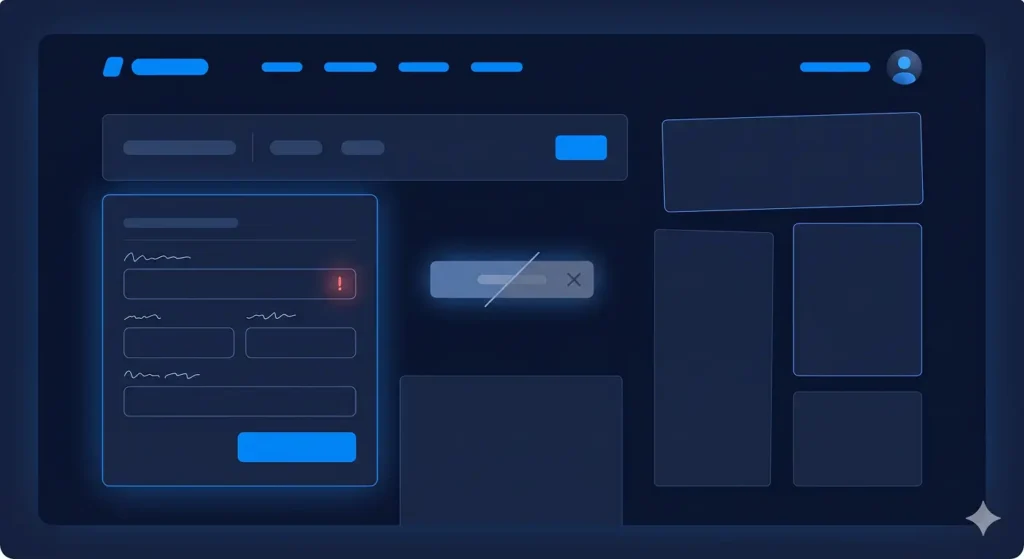
A website can have excellent reviews and still feels risky if the interface is hard to use. Broken buttons, unclear forms, crowded sections, inconsistent spacing, weak mobile layout, or slow interactions create friction.
This is where trust-building UX matters. Visitors judge credibility through experience, not only content. Real-world user experience. If the page feels difficult, the business starts to feel difficult. If the form is confusing, the service may feel disorganized. If the design changes style from section to section, confidence drops.
Good UX does not just make a page look better. It makes the business feel easier to trust.
5. A Conversion-Focused Website Connects Proof to Action
A conversion-focused website does not place testimonials randomly. It uses proof at the moments where doubt appears. If visitors may question expertise, show relevant case studies. If they may worry about risk, explain the process. If they may delay action, show what happens after they submit the form.
Trust should support the customer decision flow. Each proof element should answer a real concern: Can this company solve my problem? “address real customer concerns”. Have they done this before? Is the process clear? Will I get a response? Is this worth my time?
Testimonials alone cannot answer all of those questions. They need to be part of a wider decision structure.
6. Trust Breaks When Customer Handling Is Weak
The website may create interest, but trust can collapse after the form submission. If leads go to a general inbox, replies are delayed, or the sales team has no clear context, the visitor’s confidence fades.
Strong customer handling is part of the trust experience. A business should know where the lead came from, what service they selected, what problem they described, and what should happen next. This requires structured forms, internal notifications, lead tracking, and sometimes CRM integration.
When the post-click process is weak, testimonials cannot protect the conversion. The visitor may believe your reviews but still lose confidence if the response feels slow or unorganized.
7. Trust Is Built by the Whole System
The real issue is not whether testimonials are useful. They are. The issue is expecting them to carry the entire trust burden.
A reliable conversion flow combines message clarity, proof, UX, performance, automation, and follow-up. Testimonials become powerful only when they sit inside that system. They confirm what the rest of the website already communicates.
For service businesses, trust is not built by saying “our clients trust us.” It is built by making every step feel clear, credible, and professionally handled. When your website does that, testimonials stop being decoration and start becoming proof.

Stop Letting Testimonials Carry the Whole Trust Burden
Client quotes help, but your website also needs clarity, proof, UX, and follow-up systems that make action feel safe. If visitors hesitate before contacting you, the problem may be deeper than your testimonial section.